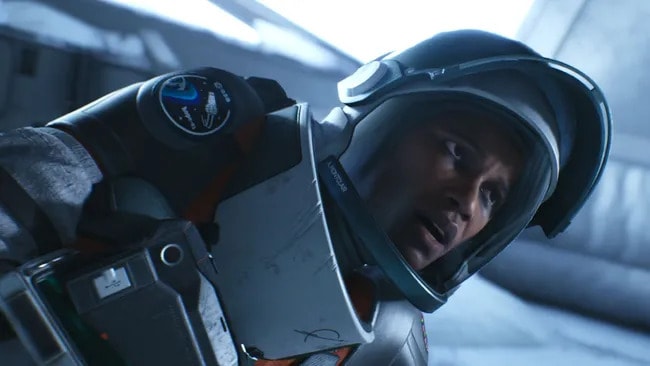
Don't Nod released Aphelion, a third-person cinematic adventure set on Persephone, and it centers on two European Space Agency astronauts separated after their ship is destroyed, featuring tense stealth and traversal moments inspired by survival horror. The game was unveiled during last year’s Summer Game Fest and promises a blend of narrative-driven scenes and hazardous environmental challenges.
Players control Ariane and Thomas, switching between characters to use complementary skills while navigating icy terrain and caves; the demo showed Jusant-style climbing reworked with reusable tools and tighter platforming. A looming, sound-sensitive alien stalks sections of the map, creating stealth encounters that leaned into Alien: Isolation–style audio-based threat design.
For players, Aphelion pairs emotional storytelling with survival-game pacing, rewarding careful exploration and character-driven choices; the ESA setting adds scientific grounding to the sci-fi. Its hybrid of cinematic narrative and tension-driven mechanics signals a trend of story-led games adopting stealth-horror rhythms to heighten player immersion.
Image Credit: Don't Nod
What Makes This Trend Stand Out
- Cinematic-stealth Hybrids
- Blending cinematic narrative sequences with stealth-horror pacing creates emotionally charged tension that reshapes player expectations for story-driven gameplay.
- Scientific-authenticity Settings
- Framing fiction within credible space agency contexts encourages grounded worldbuilding that deepens immersion through realistic tech and procedural detail.
- Tool-based Traversal Systems
- Reusable traversal gadgets and refined climbing mechanics shift level design toward emergent navigation challenges that reward skillful movement and creative problem solving.
Sectors Adopting This
- Interactive-entertainment Development
- Narrative-first studios could reconfigure production pipelines to prioritize tightly integrated story and mechanical beats, enabling emotionally resonant yet mechanically complex titles.
- Spatial-audio Technology
- Advanced sound design platforms driven by precise spatialization and reactive audio cues allow threat systems to be communicated aurally, intensifying suspense without visual prompts.
- Immersive-education and Simulation
- Simulation experiences leveraging authentic ESA-like scenarios present opportunities for experiential learning tools that blend cinematic storytelling with procedural training elements.