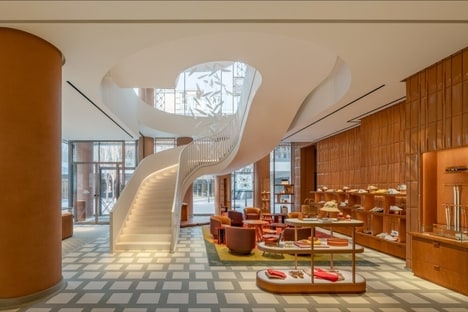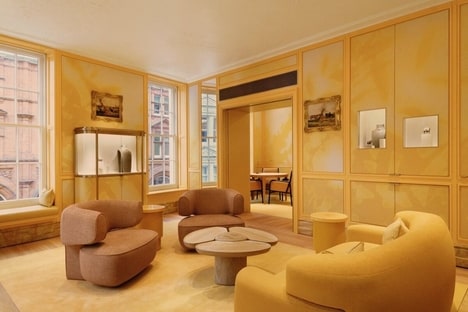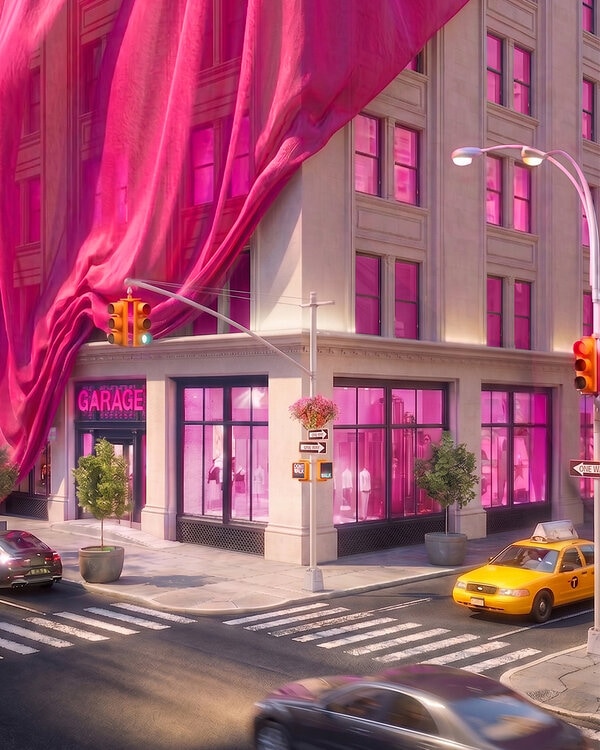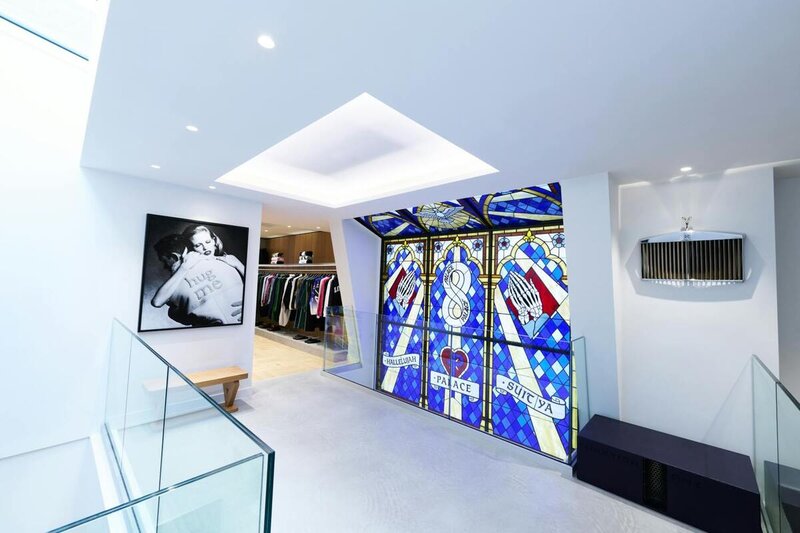
Palace is opening a London flagship at 8 Poland Street on Nov. 5, giving skaters and streetwear shoppers a larger home base that doubles as a store and brand archive. The site covers nearly 2,700 square feet and integrates stained glass and raw-oak ‘Tri-Ferg’ seating into the sales floor. Visitors can shop current product while moving through the label’s own backstory.
Regular apparel and decks sit beside two launch exclusives: Palace’s Burberry collaboration and additional merchandise built around the number 8, rendered as an infinity sign from the address.
Palace shows how keeping the Burberry pieces at the London store can make the trip part of the purchase rather than another online drop, while nearly 2,700 square feet in its home city turns the flagship into a destination branch and the in-store-only capsule leans into divergence by rewarding those who show up.
Image Credit: Palace
Why This Trend Is Growing
- Archive-style Retail
- Brand history embedded into flagship environments creates richer physical shopping experiences that differentiate stores from transactional ecommerce channels.
- Location-exclusive Drops
- Store-only collaborations and address-inspired capsules turn scarcity into a travel-worthy retail feature for streetwear consumers.
- Cultural Flagship Spaces
- Large-format stores designed as community anchors can blend commerce, storytelling, and subculture identity within high-traffic urban neighborhoods.
Industries Being Reshaped
- Streetwear Retail
- Experiential flagships give streetwear labels new ways to deepen loyalty through exclusive products, spatial design, and brand heritage.
- Luxury Fashion
- Collaborations between heritage houses and skate-rooted brands signal premium opportunities around cross-cultural credibility and destination-based releases.
- Commercial Real Estate
- Retail spaces that function as archives and social destinations increase demand for flexible flagship locations in culturally relevant districts.