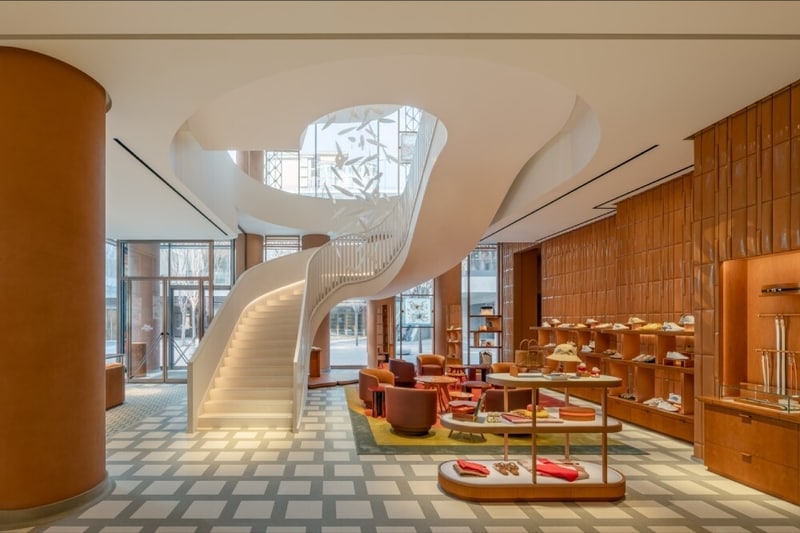
Hermès unveiled a five-storey standalone flagship in Beijing’s Taikoo Li Sanlitun, designed by Paris studio RDAI with London’s Mamou-Mani Architects, featuring a rose-pink and terracotta ceramic-tiled facade and an embedded grand stone staircase. The building straddles two street levels and offers dual entrances marked by the house’s ex-libris, with interiors organized into dedicated zones for shoes, silks, perfume, beauty and equestrian pieces, plus apparel floors and private fitting salons.
Upper floors showcase detailed marquetry, a lacquered peony-engraved wall, ceramic brick H-patterns and a rooftop salon opening to a landscaped terrace, all drawing visual cues from the Forbidden City’s glazed rooflines and woven motifs. The store matters because it elevates luxury retail into cultural storytelling, offering immersive materiality and layered experiences that align with a broader trend of architecture-led brand flagshiping.
Image Credit: Hermès
Part of the cluster
Participatory Retail
Stores are becoming hands-on learning environments for shoppers
Explore the cluster


What Makes This Trend Stand Out
- Cultural-context Flagship Design
- Blending local heritage motifs and materials into flagship architecture opens possibilities for retail environments that function as place-based cultural destinations rather than mere points of sale.
- Material-driven Brand Storytelling
- Use of crafted surfaces like ceramic tiles, marquetry and engraved lacquer suggests new productization of artisanal building components to communicate brand narratives through tactile architecture.
- Layered Spatial Retail Experiences
- Multi-level, zoned interiors with private salons and rooftop terraces indicate demand for retail formats that prioritize experiential sequencing and personalized spatial journeys over commodity display.
Sectors Adopting This
- Luxury Retail
- Flagship store transformations point to opportunities where immersive architectural programming becomes a core brand differentiator and revenue-generating venue for curated events and services.
- Architectural Materials
- Increased demand for bespoke ceramics, specialty marquetry and engraved finishes signals a market for high-value, design-led material products and modular artisanal systems.
- Hospitality and Experience Design
- The integration of terraces, salons and multi-level circulation suggests crossover potential for hospitality operators to adopt retail-style storytelling environments that extend guest experience beyond accommodation.