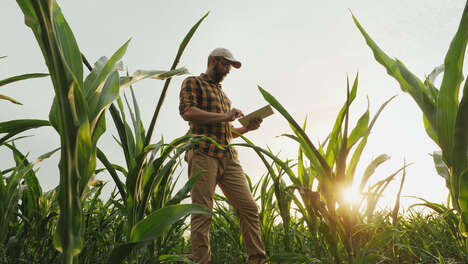
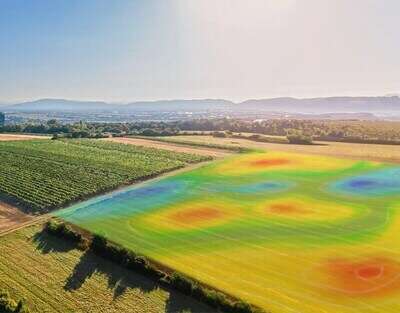
Crops are nearly as old as modern humans, and yet, until the advent of new technology from startup 'Descartes Labs,' predicting how crops behave and perform involved a lot of estimation and a lot of farmers in the fields providing data. The new technology from the New Mexico startup hopes to make the process both more efficient and less work-intensive by using satellite imagery and artificial intelligence.
Throughout trials over the past two years, the Descartes Labs crop yield system has consistently outperformed the accuracy of the US Department of Agriculture, often by a full percentage point. Though that margin may not sound like much, a one percent difference in corn yield across the entire US is a huge amount. And now, by being able to refer to historical data that the Descartes Labs system has gathered as well as using the original machine learning technique, the company predicts that it will improve its algorithm to 2.5 percent better than the USDA.
What's Driving This Trend
- Satellite Imagery
- Using satellite imagery, businesses can gather data to accurately predict crop yields and improve efficiency.
- Artificial Intelligence
- Leveraging artificial intelligence, companies can develop advanced algorithms to estimate crop yields with higher accuracy than traditional methods.
- Machine Learning
- By utilizing machine learning techniques, organizations can continuously improve their crop yield prediction algorithms based on historical data.
Who This Affects Most
- Agriculture
- The agriculture industry can benefit from satellite imagery and AI technology to optimize crop production and improve yields.
- Big Data Analytics
- In the field of big data analytics, the use of satellite imagery and machine learning algorithms can provide valuable insights for predicting crop yields.
- Technology Research
- Technology research companies can explore the potential of satellite imagery and AI in revolutionizing crop yield prediction and analysis.