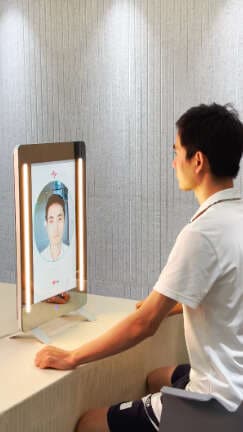
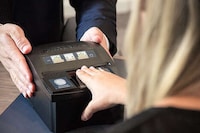
Germany-based biometrics company implements contactless fever screening technology to the Scandinavian Park Mall. This is done to add another level of safety measures and improve overall health protection by measuring one's body temperature at a distance. Using Dermalog's fever detection camera, it decreases risk of contracting viruses including COVID-19.
When customers enter the mall's premises, their temperature is measured as quick as one second from a distance of 2 meters. Additionally, the company uses its biometric knowledge to scan faces and release an alert if one's body temperature marks a fever. The technology system can also automatically detect masks and the lack of masks to be informed that it is mandatory in order to enter the shopping center.
Image Credit: Dermalog
Why This Trend Is Growing
- Contactless Fever Screening
- Implementing contactless fever screening technology can enhance safety measures and health protection by measuring body temperature at a distance.
- Biometric Fever Detection
- Using biometric knowledge to detect fevers through facial scanning provides a proactive approach to identifying potential health risks.
- Automated Mask Detection
- Leveraging biometrics to automatically detect masks and enforce mask-wearing can help ensure compliance with safety guidelines in public spaces.
Industries Being Reshaped
- Biometrics
- The biometrics industry can capitalize on the opportunity to develop and implement innovative technologies for fever screening and health protection.
- Healthcare
- The healthcare industry can integrate contactless fever screening technology as an additional safety measure to enhance patient care and infection control.
- Retail
- The retail industry can adopt automated mask detection systems to prioritize the health and safety of customers and employees in stores and shopping centers.