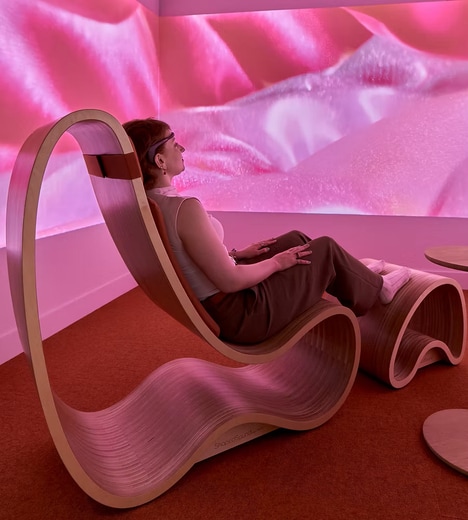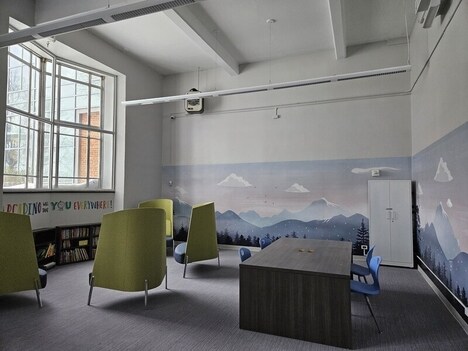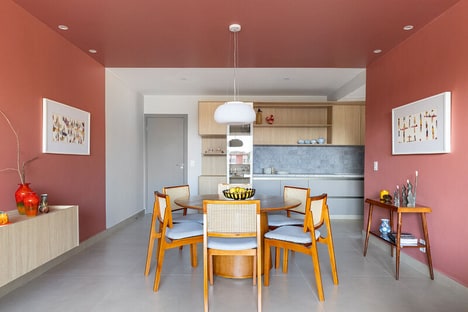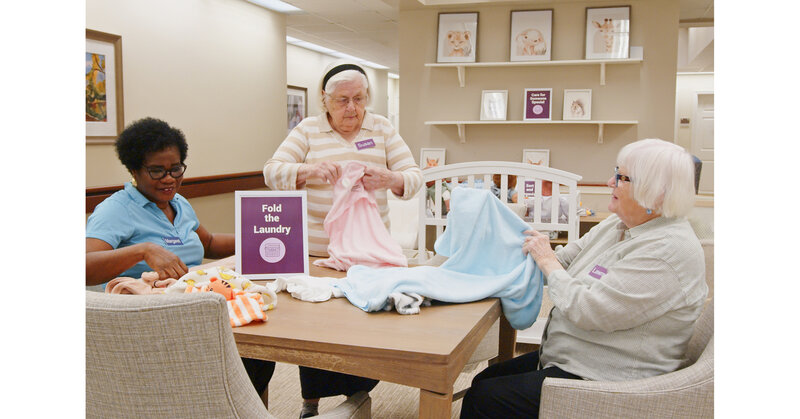
Benchmark Senior Living expanded dementia care with ‘Inspired Spaces,’ activity areas built into its ‘Mind & Memory Care’ neighborhoods for residents living with dementia. Available in 68 neighborhoods across the Northeast, the concept makes the setting part of care by giving residents places to choose familiar tasks, either alone or with associate support.
Each community can shape up to 10 spaces around residents’ interests. A ‘Creative Arts Corner’ offers residents a place to paint or craft, while a ‘Nature Nook’ supports simple outdoor tasks. The setup draws on Montessori principles, using adult-friendly objects that invite use.
Benchmark Senior Living shows how making the room layout part of care can turn memory-care design into an operating tool rather than a passive backdrop, while up to 10 adaptable formats give communities a repeatable way to support autonomy and family interaction without relying solely on staff-led sessions.
Image Credit: Benchmark Senior Living
Key Themes Behind This Trend
- Therapeutic Environment Design
- Senior living operators can treat room layouts as active care tools, creating differentiated dementia programs through spaces that support autonomy, familiarity, and meaningful daily engagement.
- Montessori-based Memory Care
- Adult-friendly task stations rooted in Montessori principles signal growth potential for care models that emphasize resident choice, retained abilities, and non-clinical participation.
- Modular Activity Neighborhoods
- Repeatable activity formats across multiple communities create scalable opportunities for personalized care experiences without depending exclusively on scheduled staff-led programming.
Where This Applies
- Senior Living
- Memory-care providers can strengthen competitive positioning by embedding adaptable activity spaces into residential neighborhoods that align care delivery with resident interests.
- Healthcare Design
- Interior planning for dementia care is evolving into a strategic service area where spatial design influences behavior, independence, and family connection.
- Assistive Care Products
- Demand may expand for tactile, safe, and familiar objects that enable residents with cognitive decline to participate in everyday tasks across structured care settings.