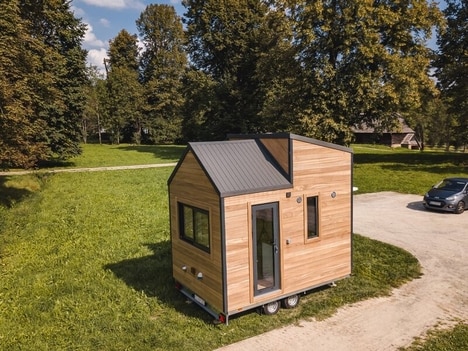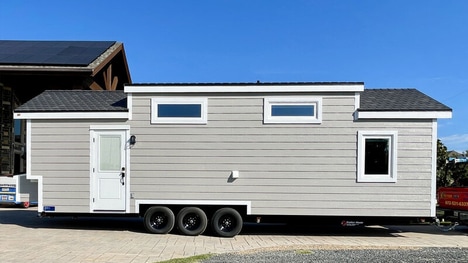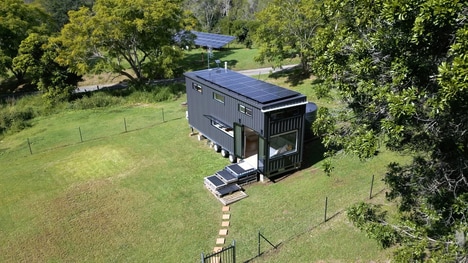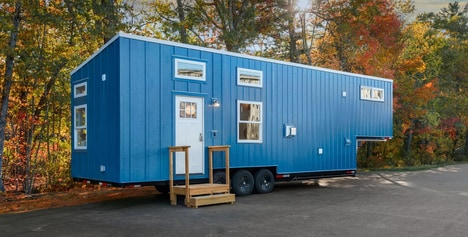
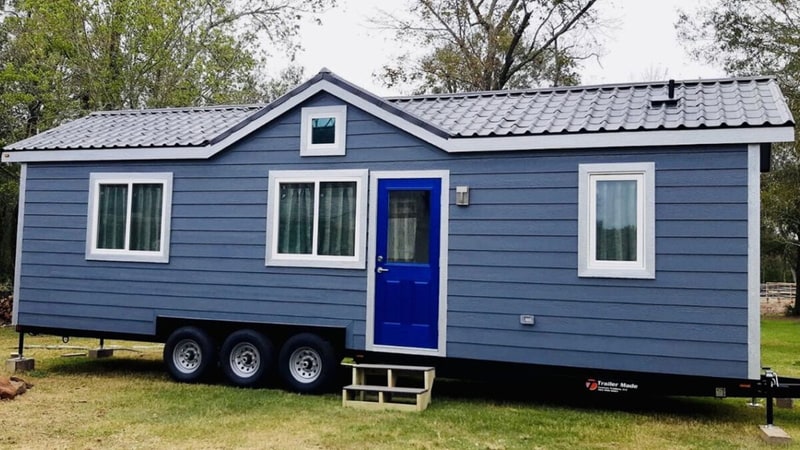
The Decathlon Tiny Homes Storm tiny house is a weather-ready model from the Texas-based brand that's rated to withstand high winds in the face of changing weather patterns.
The home is built on a triple-axle trail and is equipped with a bedroom, full kitchen, living area and bathroom with ample storage throughout. The home is rated to work with RV-style hookups and features a 30-gallon water heater, 12,000 BTU mini split for heating and cooling, and additional amenities that can be added on.
The Decathlon Tiny Homes Storm tiny house is equipped with hurricane clips on the rafters to lock the roof frame to the walls to prevent the structure from separating or lifting during high winds. The home is rated to withstand severe tornado exposure, according to the brand.
Image Credit: Decathlon Tiny Homes
What's Driving This Trend
- Storm-resistant Micro Housing
- Compact homes engineered for severe wind exposure signal a growing market for resilient dwellings that combine mobility, affordability and climate-adaptive construction.
- Climate-ready Prefab Design
- As extreme weather becomes more common, prefabricated housing with reinforced roof systems and modular utility setups creates room for faster, safer residential deployment.
- Mobile Resilience Living
- RV-compatible tiny homes with full amenities reflect demand for flexible housing formats that support relocation while maintaining protection against environmental volatility.
Who This Affects Most
- Tiny Home Manufacturing
- Builders can differentiate through structural durability, storm ratings and integrated comfort systems that elevate tiny homes from lifestyle products to resilient housing solutions.
- Disaster-resilient Construction
- The use of hurricane clips, reinforced framing and wind-rated designs points to new standards for compact structures built around escalating climate risk.
- Modular Housing
- Factory-built homes with adaptable utilities and weather-hardened shells are reshaping how communities think about scalable shelter in high-risk regions.