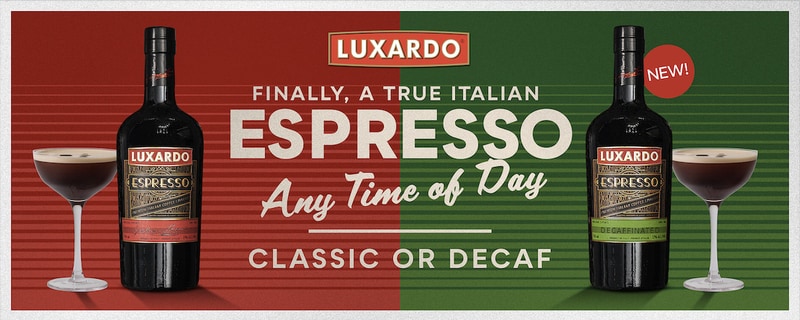
Luxardo, the Italian liqueur producer with over two centuries of history, has launched a Decaf Espresso Liqueur. The company claims that this product is the first of its kind on the market.
The new Decaf Espresso Liqueur maintains the same bold, authentic espresso flavor as the brand’s existing best-selling espresso liqueur but contains only 0.4 milligrams of caffeine per ounce. The production process involves decaffeinated Arabica beans sourced from Brazil, Vietnam, and Uganda that are roasted, ground, and then subjected to a 25-day heated infusion to extract essential oils and body, resulting in a profile with notes of cocoa, gentle sweetness, and a smooth finish. Luxardo bottles its Decaf Espresso Liqueur at 27% alcohol by volume with no added coloring agents.
Image Credit: Luxardo
Key Themes Behind This Trend
- Decaf Cocktail Culture
- Caffeine-conscious drinkers are reshaping after-dark indulgence as espresso-inspired spirits deliver coffeehouse flavor without the stimulant load.
- Premium Low-caffeine Spirits
- Heritage liqueur makers are finding new white space in refined formulations that preserve bold taste while reducing functional side effects.
- Ingredient-transparent Liqueurs
- No-color-added recipes and detailed bean sourcing create differentiation in a spirits category increasingly influenced by clean-label expectations.
Where This Applies
- Alcoholic Beverages
- The spirits market gains room for specialty liqueurs that blend traditional production credentials with modern wellness-adjacent consumption preferences.
- Coffee
- Decaffeinated Arabica sourcing from global origins expands coffee’s role beyond cafés into premium adult beverages with nuanced sensory profiles.
- Hospitality
- Bars, restaurants, and hotels benefit from evening cocktail formats that satisfy espresso martini demand while fitting late-night moderation occasions.