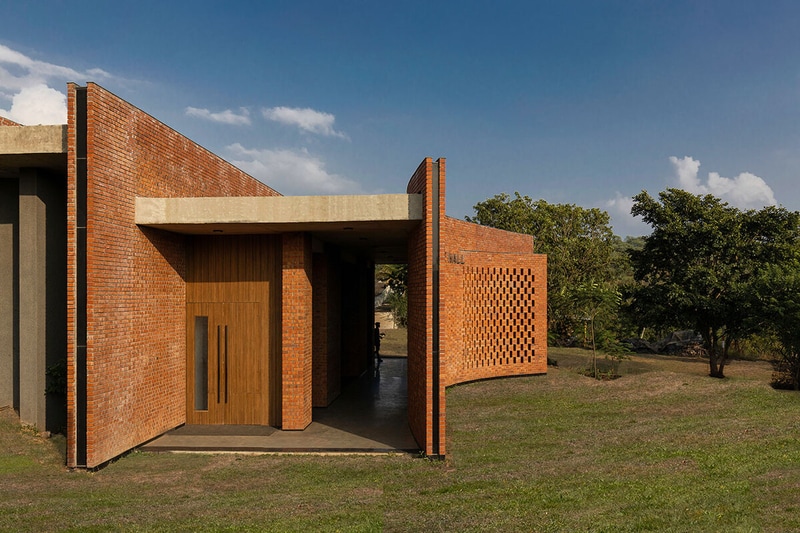
Dakshana Valley Institute occupies a 109-acre site in Khed, India, where Morphogenesis planned the campus around the natural north-to-south slope so the landscape remains integrated with daily learning. The residential secondary school serves gifted students from low-income households preparing for medical and engineering entrance examinations. A central brick building anchors the campus, while a meandering route links 13 classrooms, a knowledge center, a dining hall, and an amphitheater. Brick was selected for its tactile quality and contributes to nearly a 50% reduction in heat gain in the region's humid climate.
Basalt, wood, terracotta, and Shahabad stone complete the material palette. Lecture halls use light shelves and vertical fins to reduce glare and improve cross-ventilation, while shaded buffer zones, covered verandas, and outdoor nooks provide additional areas for discussion, study, and relaxation. A curved arrival pavilion frames panoramic views across the valley and the lake beyond.
What Makes This Trend Stand Out
- Climate-responsive Campuses
- Passive cooling, shaded circulation, and slope-sensitive planning signal new potential for schools that reduce energy loads while improving comfort in hot and humid regions.
- Material-led Learning Spaces
- Locally rooted brick, basalt, terracotta, and stone create opportunities for tactile educational environments that combine durability, cultural relevance, and lower thermal impact.
- Equitable Residential Education
- Campus models designed for gifted low-income students point to scalable formats where architecture, housing, and academic preparation converge to widen access to competitive careers.
Sectors Adopting This
- Education
- Residential schools with integrated study, dining, and outdoor discussion areas illustrate how learning infrastructure can support high-performance academic pathways for underserved students.
- Architecture
- Landscape-driven design strategies offer firms a differentiated approach to institutional projects by merging environmental performance, student wellbeing, and place-based identity.
- Building Materials
- The thermal performance of traditional masonry presents growth potential for material suppliers developing climate-appropriate, low-energy alternatives to conventional campus construction systems.