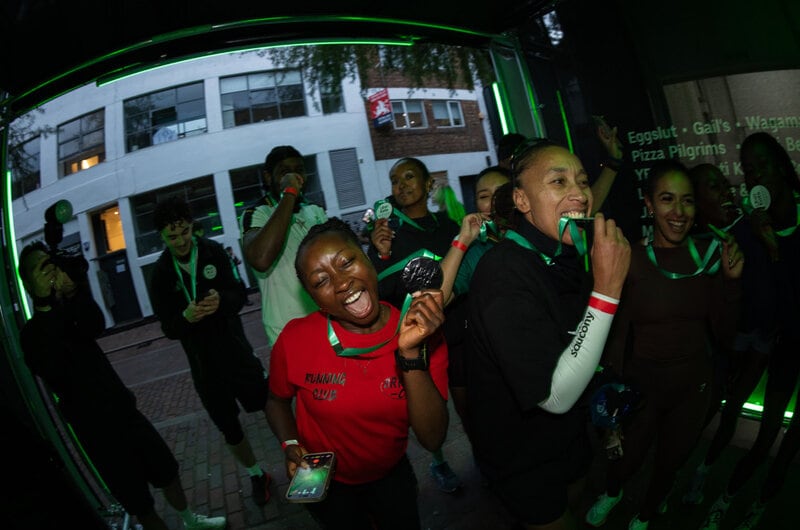
Uber Eats has opened the Morsel Marathon in London, a public running route for food-focused runners built as a world-first tasting course across 26 stops. Mapped with Charlie Dark MBE, the city course links restaurants and cafes so participants can treat the run as an eating trail rather than a timed effort.
The route spans 11k, keeping it short enough to walk, jog, or run while still covering a broad slice of the capital's dining scene. Uber Eats paired the project with City Harvest through a 150,000-meal donation, giving the event a direct benefit for London communities.
A 26-stop route over 11k turns food delivery into an in-person brand experience, giving Uber Eats a way to meet London runners in person. The City Harvest tie-in shifts the format from a one-off stunt toward a community event with a clearer social return.
Image Credit: Retail Times
Key Themes Behind This Trend
- Edible Fitness Routes
- Hybrid routes that combine light exercise with tasting stops create new space for brands to turn wellness routines into social, sensory experiences.
- Experiential Delivery Branding
- Food delivery platforms are extending beyond apps by building real-world encounters that deepen loyalty through place-based discovery and participation.
- Charitable Urban Activations
- Community-linked brand events with measurable donations give public experiences added credibility while connecting consumer engagement to local impact.
Where This Applies
- Food Delivery
- Delivery marketplaces can differentiate through offline food trails that transform restaurant discovery into memorable, shareable city experiences.
- Fitness and Recreation
- Running and walking communities gain fresh engagement models when routes prioritize enjoyment, exploration, and hospitality over performance metrics.
- Urban Tourism
- City-focused culinary maps offer tourism operators a format for showcasing neighborhoods through active, self-guided food exploration.