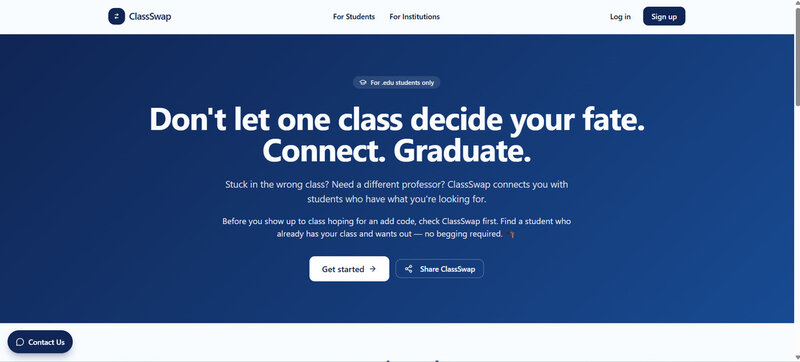
ClassSwap is a course-enrollment tool created by 17-year-old UCLA student Joseph Borna to help students connect with peers looking to swap compatible classes or sections. The platform includes an alert system that notifies users about relevant enrollment opportunities. ClassSwap is available through ClassSwap.org and is positioned as a student-focused solution for difficult schedules.
The service lets students post the class they currently hold alongside the specific course or section they hope to join. When compatible requests arise, ClassSwap can connect the students, who must still complete changes through their college’s official enrollment system. Users can also monitor classes and receive notifications about relevant opportunities. Initial campus support includes UCLA, Santa Monica College, USC and California State University, Northridge.
For students, ClassSwap centralizes opportunities that might otherwise be scattered across group chats, emails and enrollment portals. Its usefulness increases as more students join each campus network, creating a local network effect during registration periods. The platform reflects demand for peer-driven education tools while giving ClassSwap a repeatable model for campus-by-campus expansion.
Image Credit: prnewswire.com
Key Themes Behind This Trend
- Peer-to-peer Enrollment
- Student-matched course exchanges reveal potential for decentralized academic marketplaces that reduce friction around scarce class availability.
- Registration Alert Systems
- Real-time notifications around course openings create room for smarter scheduling tools that respond to fast-moving enrollment windows.
- Campus Network Effects
- Value grows as more students participate, highlighting scalable opportunities for local education platforms built around dense campus communities.
Where This Applies
- Higher Education
- Colleges face new pressure from student-led tools that improve access to courses without replacing official enrollment infrastructure.
- Education Technology
- Course-swapping platforms expand the edtech category beyond learning delivery into operational pain points tied to academic planning.
- Student Services
- Support ecosystems for learners can be enhanced through digital coordination tools that simplify scheduling, advising and campus navigation.