
Along the A44 highway, between Amsterdam and The Hague, sits a giant, human-shaped building. It is the home of Corpus, a tactile interactive museum experience that takes visitors through the spaces inside their own bodies.
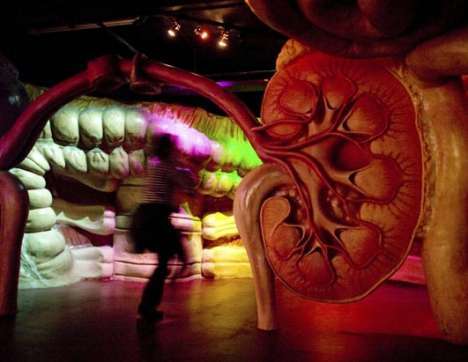
At the museum you can experience hay fever from inside the nose, replete with a rollicking sneeze. You can don 3D glasses and watch as cartoon sperm fertilize an egg. You can bounce your way across a rubber tongue as you navigate taste buds and hear burps welling up in the deep.
The tour begins on an escalator ride through a wound in the calf. Once inside visitors experience the body's reaction to a wood splinter. After the 3D fertilization movie, guests follow a block of cheese as it makes its way down the digestive tract. Other exhibits feature the heart, lungs, mouth, and of course the brain. A beanbag game even allows visitors to try and take down bacteria before it can cause an infection.
What Makes This Trend Stand Out
- Interactive Museum Experiences
- The trend of interactive museum experiences presents opportunities for innovative and immersive educational journeys.
- Tactile Learning
- The trend of tactile learning allows for a hands-on approach to understanding complex concepts, offering potential for disruptive educational methods.
- Virtual Reality in Education
- The increasing use of virtual reality in education paves the way for transformative and engaging learning experiences.
Sectors Adopting This
- Tourism and Entertainment
- The tourism and entertainment industries can leverage interactive museum experiences to attract and engage visitors in unique ways.
- Education and Edtech
- The education and EdTech industries have the opportunity to enhance learning through tactile experiences and virtual reality technologies.
- Healthcare and Medical Training
- The healthcare and medical training industries can utilize interactive exhibits like Corpus to educate and train professionals in an immersive environment.