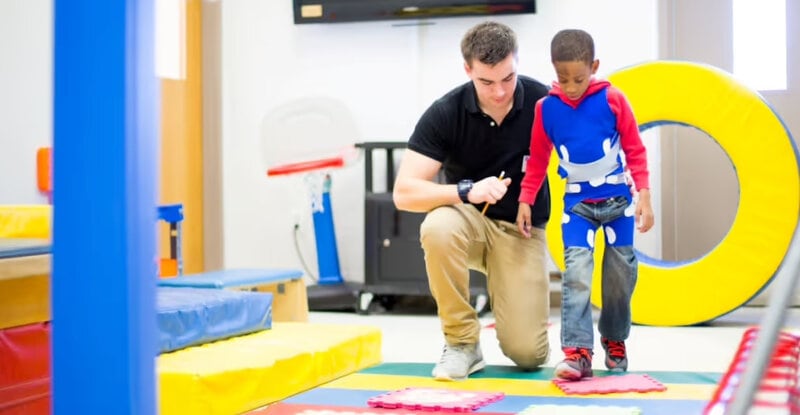
NeuroCore is developing a brace for children with cerebral palsy that tracks movement during physical therapy and delivers therapists with usable session data. Built by four Atlanta high schoolers, the wearable uses sensors and AI-powered software to establish a baseline for core stability, providing cues during training and allowing clinicians to review how movement changes.
Sensors sit on the hip and lower back, where the brace monitors core control linked to movement and balance. Cerebral palsy affects 18 million people worldwide, and NeuroCore is now seeking pilot opportunities to see how the device fits into therapy sessions.
Reviewable movement data from the brace turns pediatric rehab hardware into a hybrid of wearable cueing and clinician measurement. That widens the value of each pilot placement because one session can coach a child and leave therapists with data to sharpen later treatment decisions.
Image Credit: Hypepotamus
Key Themes Behind This Trend
- Sensor-guided Rehab
- Wearable sensors embedded in therapy equipment create richer feedback loops that make rehabilitation sessions measurable, adaptive, and more clinically useful.
- AI Movement Baselines
- AI-powered baseline tracking gives clinicians a clearer view of patient progress, opening space for personalized therapy plans based on changing mobility patterns.
- Pediatric Assistive Wearables
- Child-focused rehab devices that combine comfort, coaching, and data capture can expand the role of assistive technology beyond support into continuous therapeutic insight.
Where This Applies
- Physical Therapy
- Data-generating braces and wearables introduce new service models for therapists by connecting in-session guidance with post-session clinical review.
- Medical Devices
- Connected orthopedic and neurological support products are shifting from passive hardware into intelligent platforms that measure function and inform care decisions.
- Digital Health
- Movement analytics for pediatric neurological care adds a specialized use case for remote monitoring, AI assessment, and interoperable patient progress data.