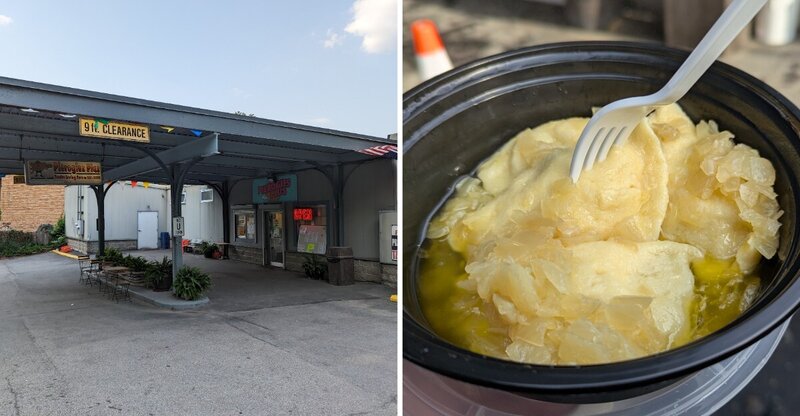
Pierogies Plus transformed a former gas station into a walk-up pierogi counter, offering travelers and local regulars a quick stop for Eastern European takeout. The converted building keeps its compact footprint, but the menu now focuses on dumplings instead of fuel.
In McKees Rocks, just west of Pittsburgh, the shop moves about 10,000 pierogies a week through a window-only setup. The operation stays simple, with a short menu, quick service, and enough volume to keep road-trippers and nearby families coming back.
That kind of output makes a small counter feel larger than its footprint, especially in a region where pierogies already carry local meaning. A stripped-down format and strong repeat business turn the old gas station into a destination instead of a novelty stop.
Image Credit: Fast Food Club
What's Driving This Trend
- Adaptive Takeout Conversions
- Vacant roadside properties become high-throughput food counters, creating room for compact restaurant models that monetize overlooked real estate.
- Regional Comfort Fast Food
- Local heritage dishes gain scalable quick-service formats, blending cultural familiarity with the speed expectations of travelers and busy families.
- Window-only Dining
- Minimal-service storefronts reduce overhead while supporting steady volume, pointing to lean hospitality formats built around convenience and repeat traffic.
Who This Affects Most
- Quick-service Restaurants
- Compact menus and walk-up service models expand how operators can deliver specialty foods without the costs of full dining rooms.
- Commercial Real Estate
- Former gas stations and small roadside sites take on new value as food destinations, reshaping reuse strategies for underutilized properties.
- Travel and Roadside Retail
- Food-focused pit stops rooted in regional identity add experiential value to short stops, strengthening competition with standard convenience formats.