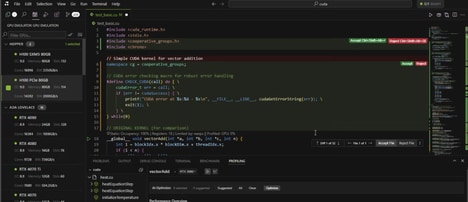
NVIDIA has filed a patent for a chatbot-style game optimization system that would let developers ask plain-language questions about performance problems and receive code-aware fixes. The concept centers on an AI model designed to inspect a game's existing code, identify issues such as stutter, and return changes that match the original blueprint.
One example is a query about stutters during cutscene transitions, where the model analyzes the code behind the hitch and suggests a fix. It could also run that answer on the GPU, or graphics processor, and return diagnostic data to help pinpoint the underlying problem.
For brands, that points to a shorter path for game studios to test performance fixes before release, rather than leaving more cleanup for launch patches. Human review would still matter because AI-written code can be wrong, but the patent sketches a more conversational route to PC tuning.
Image Credit: NVIDIA
Why This Trend Is Growing
- Conversational Debugging
- Plain-language interfaces are shifting technical troubleshooting toward AI copilots that translate developer intent into targeted code analysis and performance recommendations.
- Code-aware Optimization
- AI systems that understand existing software architecture create opportunities for faster tuning by preserving original design logic while identifying bottlenecks.
- Gpu-assisted Diagnostics
- Hardware-linked AI testing environments enable richer performance validation by combining automated code suggestions with real-time graphics processing data.
Industries Being Reshaped
- Video Game Development
- Studios gain access to more efficient pre-release performance workflows as AI tools help surface stutter, latency, and rendering issues earlier in production.
- Artificial Intelligence
- Model providers can expand into specialized developer productivity tools that pair natural-language interaction with domain-specific code reasoning.
- Computer Hardware
- Chipmakers are positioned to differentiate graphics platforms through embedded optimization services that connect hardware telemetry with software fixes.