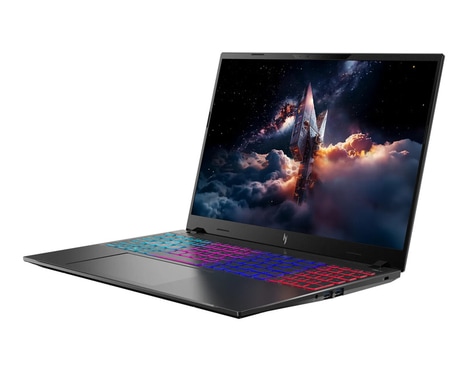

Nvidia has released DLSS 5, a neural rendering feature tested on a Lenovo Legion Pro 7 laptop equipped with an RTX 5090. It uses a computationally demanding model that currently runs in NBA 2K27. The implementation lacks in-game sliders and must be toggled with a hotkey, limiting granular control over its neural upscaling settings.
Benchmarks show a steep performance penalty when DLSS 5 is enabled without frame generation: at 4K, the average frame rate fell to about 28 FPS. Enabling Multi Frame Generation dramatically increases displayed FPS—for example, 3x FG lifted 4K output to ~73 FPS—but higher FG multipliers increase measured PC latency.
For players, this means noticeably better visual fidelity at the cost of raw performance and occasional 0.1% lows that can affect timing-sensitive moments. Nvidia plans further optimizations for the RTX 50 Series and broader support later, so tuning will be key to wider gameplay adoption.
Image Credit: Nvidia
Key Themes Behind This Trend
- Neural Rendering Tradeoffs
- Advanced upscaling models are reshaping performance expectations as visual fidelity, latency, and frame stability become differentiated features in premium gaming systems.
- Frame Generation Scaling
- Synthetic frame multiplication introduces new value in high-resolution play while creating openings for tools that balance perceived smoothness with competitive responsiveness.
- Granular Graphics Control
- Limited in-game tuning highlights demand for more transparent optimization interfaces that let users personalize neural enhancement settings by genre, hardware, and latency tolerance.
Where This Applies
- Gaming Hardware
- Laptop and GPU makers face growing opportunities to pair high-end components with AI-aware thermal, power, and performance management systems.
- Video Game Development
- Studios integrating neural upscaling can differentiate titles through adaptive rendering presets designed around play style, scene complexity, and responsiveness needs.
- Performance Benchmarking
- Testing platforms are becoming more valuable as neural rendering and frame generation require new metrics that capture latency, low-percentile frame rates, and perceived quality.