Artificial Agency has developed an AI-powered single-player mode for Owlchemy Labs’ Dimensional Double Shift, giving NPCs the ability to behave more like human co-op partners. The system selects from preset actions and dialogue, allowing characters to respond, collaborate and interact with a solo player while keeping the game’s original writing and character design intact.
For the project, Artificial Agency trained a smaller model specifically around Dimensional Double Shift gameplay. It uses an open-weight base that developers can customise without depending on expensive frontier AI models. The company says the models are small enough to operate on local devices such as phones and consoles, with operating costs of around 1% of a leading foundation model. Artificial Agency was founded by former Google DeepMind researchers and has raised US $16 million.
The technology is designed to retain the social feel of the game’s multiplayer experience when playing alone, while giving developers control over important scripted moments. For game studios, the approach offers a way to build more responsive NPC interactions without removing the role of human writers and designers.
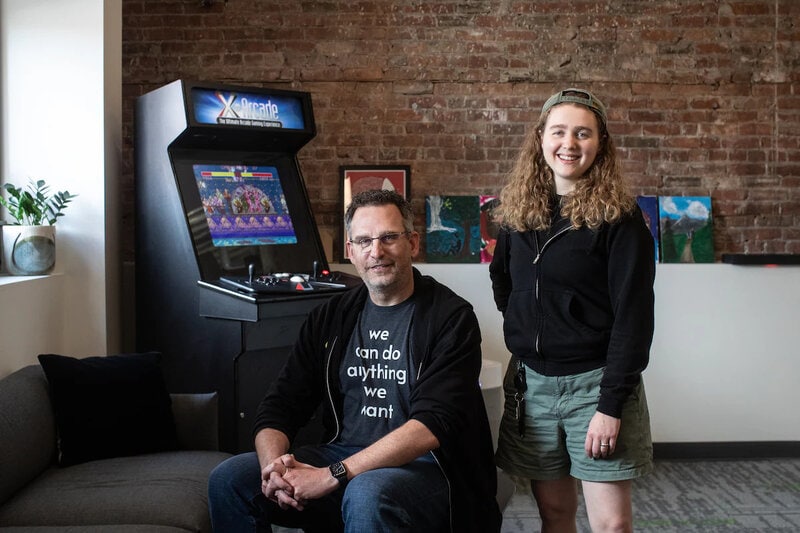
Image Credit: JASON FRANSON/The Globe and Mail
What Makes This Trend Stand Out
- Responsive NPC Companions
- Solo games can gain richer social dynamics through AI characters that coordinate, react and converse within designer-defined boundaries.
- Small-model Game AI
- Locally deployable models create cost-efficient paths for studios to add adaptive behaviors without relying on expensive frontier systems.
- Writer-controlled Generative Play
- Hybrid AI systems preserve authored story beats while enabling more varied interactions that feel personalized to each player session.
Sectors Adopting This
- Video Gaming
- Game studios can expand single-player engagement by embedding teammate-like NPC intelligence into existing gameplay formats.
- Artificial Intelligence
- Specialized, lightweight models present commercial opportunities for domain-specific AI that runs affordably on consumer devices.
- Interactive Entertainment
- Narrative-driven experiences can become more responsive as scripted content merges with controlled real-time character behavior.