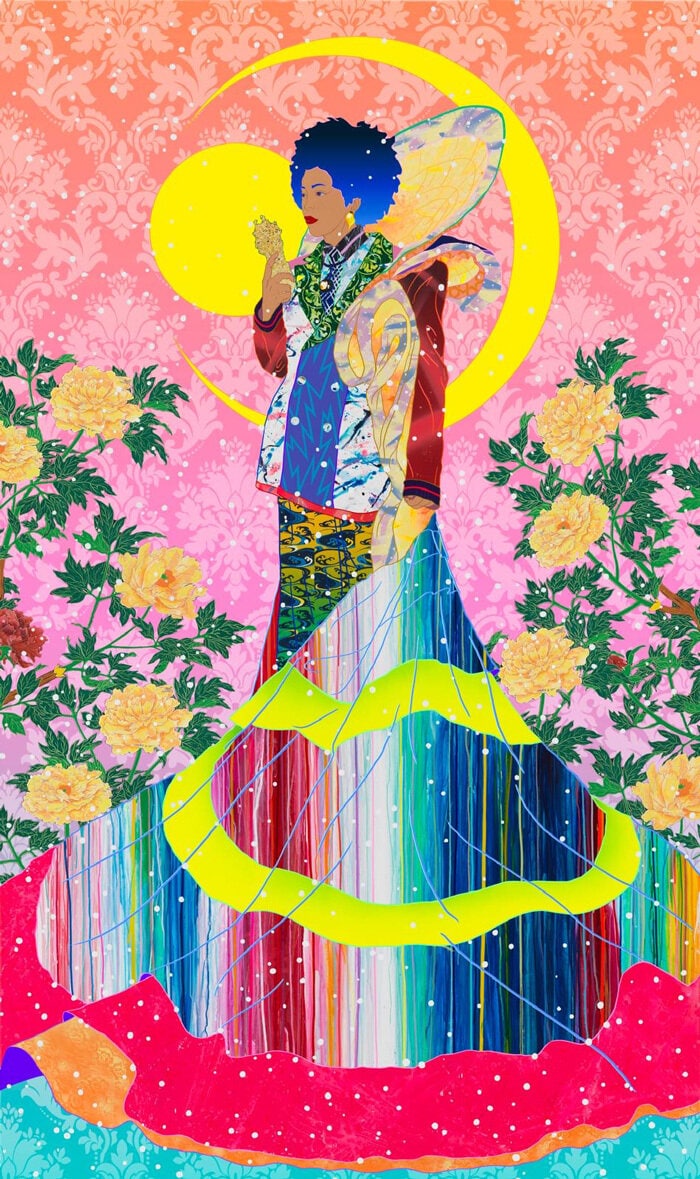
The Murmrr Arts Foundation has launched its inaugural commission series — The Murmrr Commission Series — with a portrait of Ms. Lauryn Hill by contemporary artist Tomokazu Matsuyama. This marks the first work to enter the foundation's permanent collection. This commission, designated Murmrr Commission No. 001, is an acrylic and enamel painting on canvas that will be unveiled during Ms. Hill's performance at The Clubhouse in East Hampton, New York. It represents a new model of cultural philanthropy that the foundation terms 'Renewable Cultural Philanthropy.'
The Murmrr Arts Foundation commissions significant works, preserves them as long-term cultural assets, and reinvests proceeds from exhibitions, limited print editions, and related initiatives into future commissions and educational programming. This creates a self-sustaining cycle where one cultural work helps finance the next.
Image Credit: Murmrr Commission No 001 Portrait of Ms Lauryn Hill, acrylic and enamel paint on canvas by Tomokazu Matsuyama, 2026
What Makes This Trend Stand Out
- Renewable Cultural Philanthropy
- Self-sustaining arts funding models create new pathways for foundations to transform commissioned works into recurring revenue for future cultural and educational initiatives.
- Performance-linked Art Unveilings
- Pairing artwork debuts with live music events expands audience engagement by blending collectible culture, celebrity influence, and experiential programming.
- Permanent Collection Monetization
- Long-term cultural assets gain expanded value when exhibitions, editions, and licensing channels support both preservation and reinvestment.
Sectors Adopting This
- Arts and Culture
- Foundations and cultural institutions are exploring circular funding structures that position artworks as enduring assets rather than one-time philanthropic expenses.
- Live Entertainment
- Concert venues and performance organizers can benefit from integrated visual art moments that deepen fan experiences and generate cultural relevance.
- Philanthropy
- Mission-driven organizations are adopting revenue-generating creative assets to support sustainable giving models and reduce reliance on traditional donations.