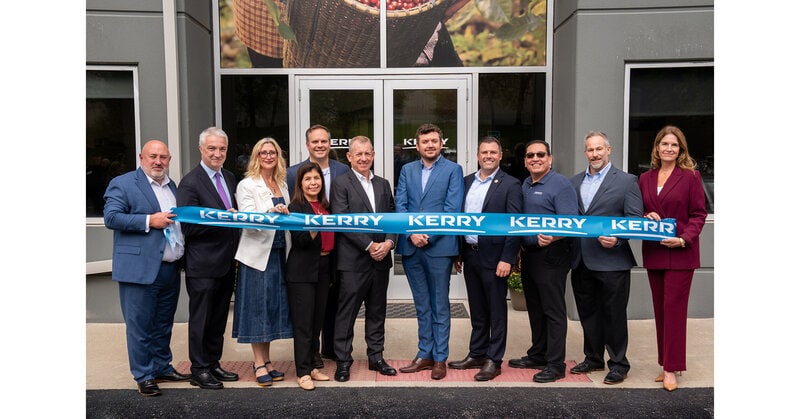
Kerry has opened a coffee extraction facility in Bethlehem, Pennsylvania, giving brands a larger base for building coffee ingredients with more consistent flavor. The site is the company’s first manufacturing location in the state and uses extraction and concentration technology to make tailored coffee solutions.
The facility includes separate hot and cold brew extraction lines, which helps the team scale coffee formats without forcing every recipe through the same process. It also uses high-Brix concentration and ambient shipping, so products can move with less refrigeration and more room for formulation choices.
For brands, this means coffee ingredients can be tuned more closely to a product’s end use, whether that is a ready-to-drink beverage or a food application. It also raises the standard for suppliers that need to balance flavor, scale and lower-carbon logistics in one supply chain.
Image Credit: Kerry
What's Driving This Trend
- Tailored Coffee Extraction
- Specialized hot and cold brew lines create room for ingredient suppliers to deliver flavor profiles aligned with distinct ready-to-drink, dairy, bakery, and snack applications.
- Ambient Ingredient Logistics
- High-Brix concentration and shelf-stable transport reduce dependence on refrigerated distribution while supporting more flexible coffee formulation across long-distance supply chains.
- Flavor-consistent Scaling
- Advanced extraction and concentration systems improve batch-to-batch reliability, giving brands a stronger foundation for premium coffee products at commercial volumes.
Who This Affects Most
- Beverage Manufacturing
- Ready-to-drink coffee, energy, and functional beverage producers can benefit from more precise ingredient inputs that preserve premium taste at scale.
- Food Ingredients
- Coffee concentrates designed for specific end uses expand possibilities for flavor systems in desserts, sauces, nutrition products, and packaged foods.
- Cold Chain Logistics
- Ambient shipping models for concentrated ingredients present a lower-carbon alternative to refrigerated transport in temperature-sensitive beverage supply networks.