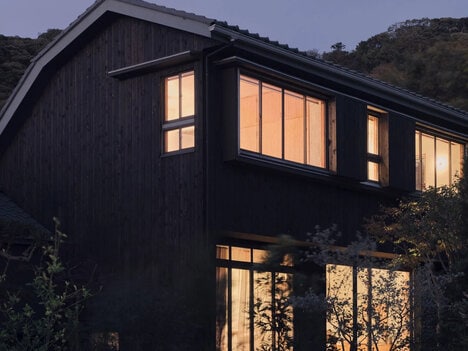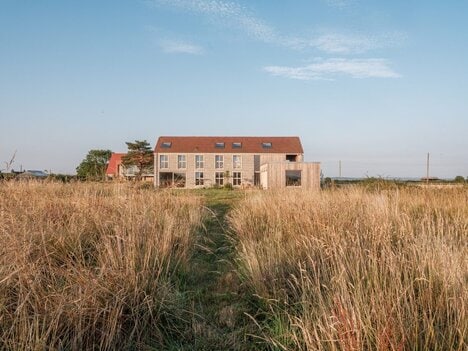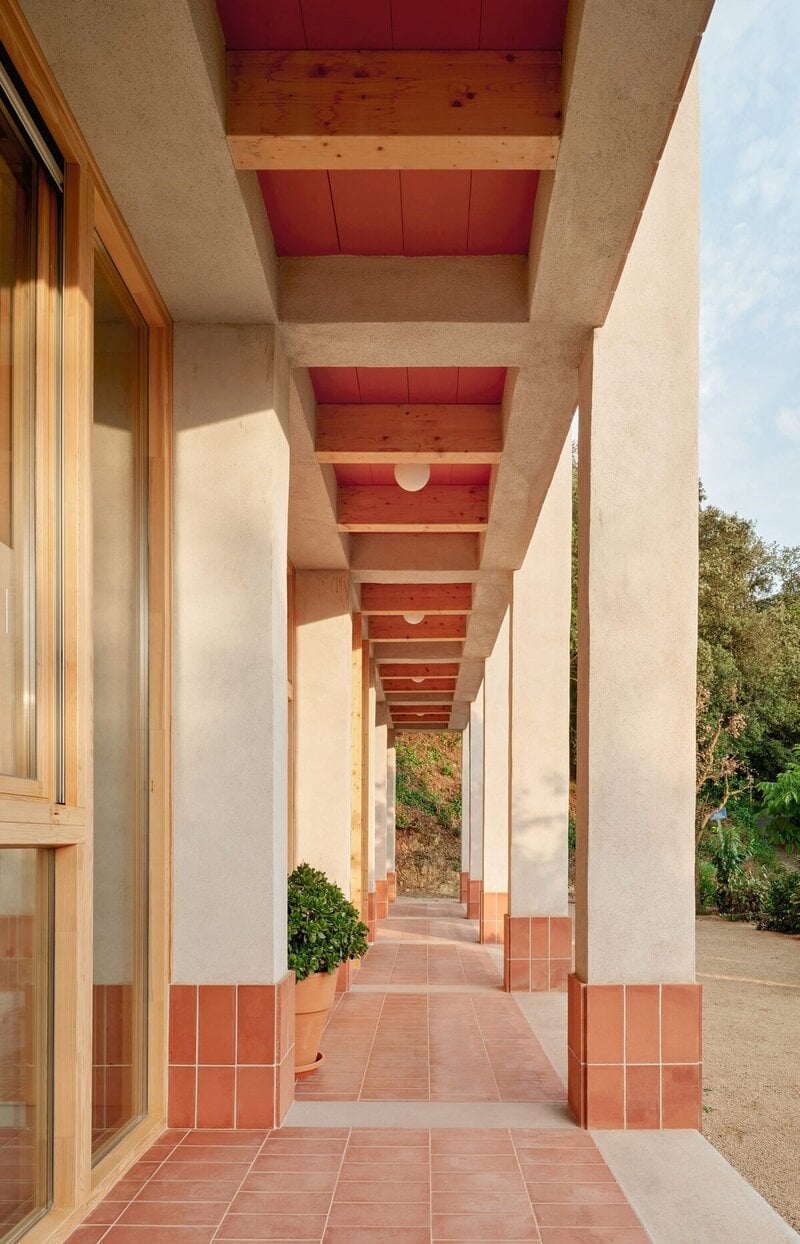
The Casa Juià farmhouse was designed by Spanish studio NUA Arquitectures for a family of five returning to rural life in Catalonia. Located at the edge of the village of Juià, the 283-square-meter home reimagines the region's traditional masia through three parallel wings organized around porches and galleries. The linear layout responds to the site's transition between village and forest, opening the east-west axis to maximize natural light, cross-ventilation and views while enclosing the north-south elevation with thermally efficient walls.
Local materials and construction techniques define the home's architectural character, with timber, ceramic and lime mortar sourced from the surrounding region and crafted by local tradespeople. Timber is used for structural beams, joinery and custom furniture, while ceramic forms the roof, façade cladding and interior finishes. Covered porches on the ground floor and staggered upper-level galleries extend the living spaces into the landscape
Image Credit: José Hevia
Key Themes Behind This Trend
- Contemporary Rural Vernacular
- Modern reinterpretations of historic farmhouse typologies create openings for residential designs that merge cultural identity with present-day comfort and performance.
- Passive Climate Architecture
- Homes shaped around natural light, cross-ventilation and thermal mass point to growing demand for low-energy buildings suited to regional climates.
- Locally Sourced Interiors
- Regional timber, ceramic and lime finishes signal potential for supply chains that connect architecture, craftsmanship and sustainable material provenance.
Where This Applies
- Residential Architecture
- Family homes that adapt traditional rural forms for modern living highlight new value in context-sensitive, climate-responsive design services.
- Sustainable Construction
- Bio-based materials, efficient envelopes and low-impact building methods are reshaping construction markets focused on carbon reduction and local resilience.
- Rural Real Estate
- Renewed interest in village-edge living suggests opportunities for property models that balance remote lifestyles, heritage aesthetics and access to nature.