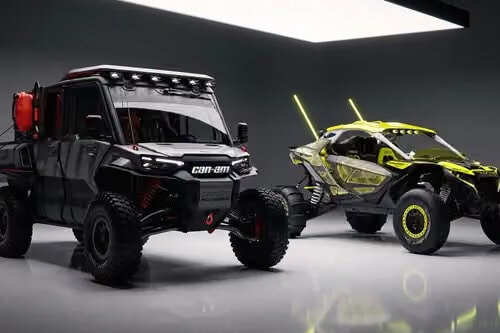
Can-Am has introduced two non-production side-by-side concepts, the Defender Prerunner and Maverick R XRay, as unrestricted studies in extreme off-road design. The Defender Prerunner is built around a six-wheel configuration with beadlock wheels and massive 35-inch off-road tires, creating a heavy-duty platform intended for remote desert race support. Front and rear winches, a front skid plate, and dedicated tool platforms add practical equipment, while a LinQ bed carries a spare tire alongside fuel jugs and shovels. Inside, Sparco racing seats, four-point harnesses, a flat-bottom steering wheel, digital instrumentation, and integrated infotainment give the utility vehicle a motorsport-focused cabin.
The Maverick R XRay takes a lighter approach, using an exoskeleton structure and translucent backlit panels in place of conventional bodywork. Designed around sand dune driving, the two-wheel-drive concept rides on paddle tires and features an active roof spoiler for aerodynamic control. Its illuminated panels shift to red under braking and can display dynamic lighting patterns for visibility at night.
Image Credit: Can-Am, hypebeast
What's Driving This Trend
- Six-wheel Utility Platforms
- Expanded axle configurations signal opportunities for purpose-built off-road vehicles that blend heavy-duty work capability with race-support mobility in extreme environments.
- Illuminated Exoskeleton Design
- Translucent body panels and dynamic lighting systems create new potential for vehicles that use visibility, signaling, and aesthetics as integrated performance features.
- Motorsport Utility Interiors
- Racing-grade seating, harnesses, digital displays, and infotainment reflect a shift toward cabins that merge professional motorsport ergonomics with rugged utility applications.
Who This Affects Most
- Powersports
- Concept-driven side-by-side development highlights whitespace for specialized recreational machines optimized for dunes, deserts, and other high-intensity terrain niches.
- Automotive Design
- Experimental structures, active aerodynamics, and unconventional materials suggest fresh directions for lightweight vehicle architecture beyond traditional bodywork.
- Off-road Equipment
- Integrated winches, tool platforms, fuel storage, and recovery accessories point to modular ecosystems that extend vehicle functionality for remote operations.