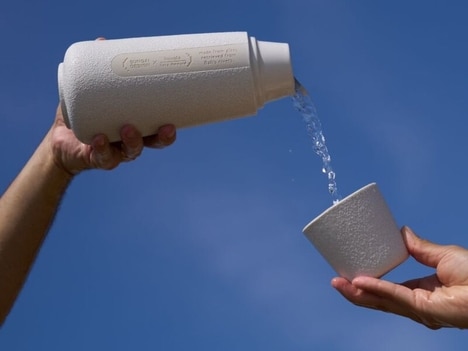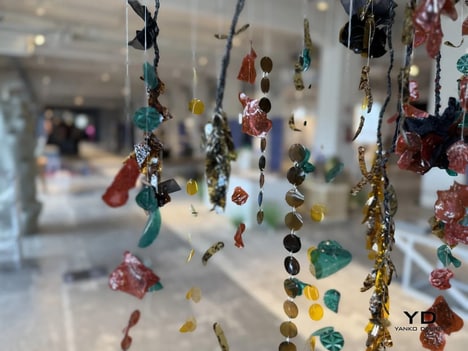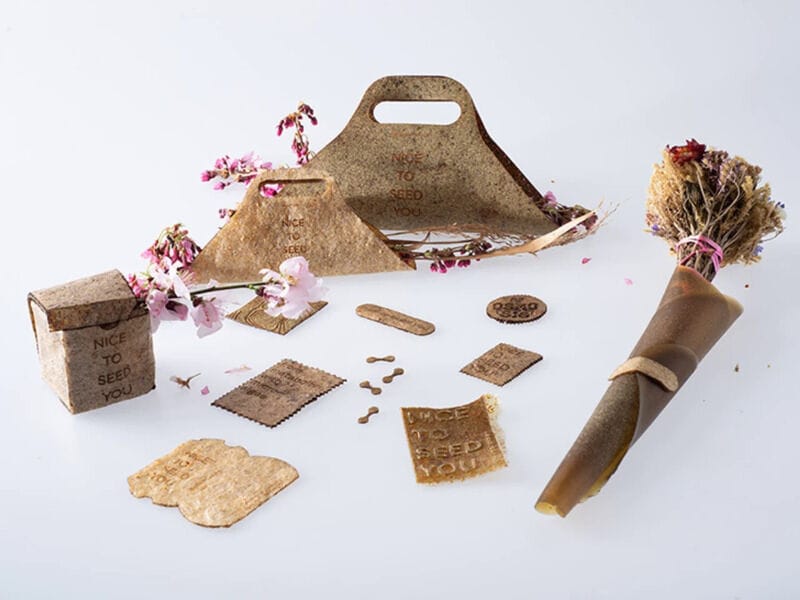
Laura Bordini finds a more purposeful approach when it comes to product waste in her By Osmosis project. She explores how to turn the waste into a biomaterial that could be optimized for other purposes. It can be used to help with plant growth and form a circular process as a result. Bordini uses microalgae biomass that is collected from the water purification process of a waste disposal center.
From this, she was able to create agricultural biostimulants and the biomaterial can then be used to create other things. This includes the ability to become packaging before turning into stimulants to aid plant growth and create better soil quality as a whole. One of the packaging that was made is a flower holder that uses wood powder blends as well.
Image Credit: Laura Bordini
Key Themes Behind This Trend
- Circular Economy Bioplastics
- Leveraging waste-derived biomaterials to create eco-friendly packaging, which transforms waste into value-added products.
- Biostimulant Innovations
- Developing agricultural biostimulants from microalgae biomass to enhance plant growth and soil quality, integrating waste into productive cycles.
- Multifunctional Biomaterial Products
- Creating versatile items like flower holders from waste-transformed biomaterials that can subsequently enrich soil, combining utility with sustainability.
Where This Applies
- Biotechnology
- Harnessing microalgae biomass through innovative purification techniques to generate functional biomaterials.
- Agriculture
- Utilizing biostimulants derived from waste processes to improve plant health and soil quality.
- Sustainable Packaging
- Developing packaging solutions from waste-derived biomaterials that also contribute to agricultural productivity.