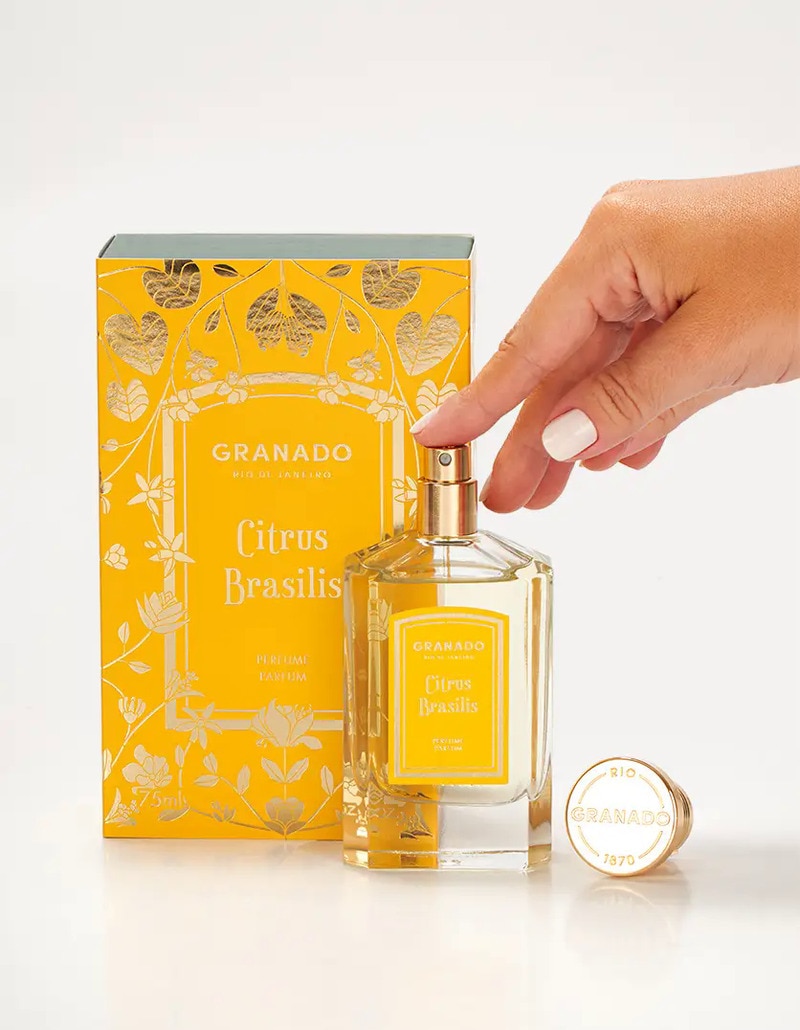
Granado's Citrus Brasilis Eau de Parfum represents a sophisticated homage to Brazil's citrus heritage. Created by renowned Givaudan perfumer Quentin Bisch, the fragrance draws from both personal nostalgia — the scent of his backyard orange tree — and Granado's 19th-century apothecary traditions of citrus-based remedies.
Granado's Citrus Brasilis Eau de Parfum opens with vibrant top notes of bergamot, mandarin, and lemon. The composition then transitions to a floral heart accented by jasmine and kumquat before settling into a musky, patchouli-infused base. What distinguishes this fragrance is its exceptional 80% natural ingredient composition and traditional maceration process, a technique employed by only a handful of perfumeries worldwide to enhance depth and longevity.
Granado's Citrus Brasilis Eau de Parfum presents a thoughtful formulation that elegantly balances energetic citrus freshness with comforting warmth.
Image Credit: Granado
Why This Trend Is Growing
- Natural Ingredient Perfumes
- A rising demand for fragrances made with high natural ingredient content offers an eco-friendly and authentic experience.
- Cultural-inspired Scents
- Consumers are captivated by fragrances that pay tribute to specific cultural heritage, creating a niche market for global scent inspirations.
- Nostalgia-driven Fragrance Design
- The use of personal and historical nostalgia as a base for fragrance creation captivates consumers seeking emotional connections through scents.
Industries Being Reshaped
- Eco-perfume Industry
- The focus on sustainability and natural ingredients is carving out a dynamic segment within the fragrance industry.
- Luxury Perfumery
- High-end, culturally rich fragrances present an upscale opportunity by leveraging traditional production techniques and unique scent profiles.
- Aromatherapy and Wellness
- The intersection of fragrance and wellness opens doors for citrus-based products that enhance mood and emotional well-being.