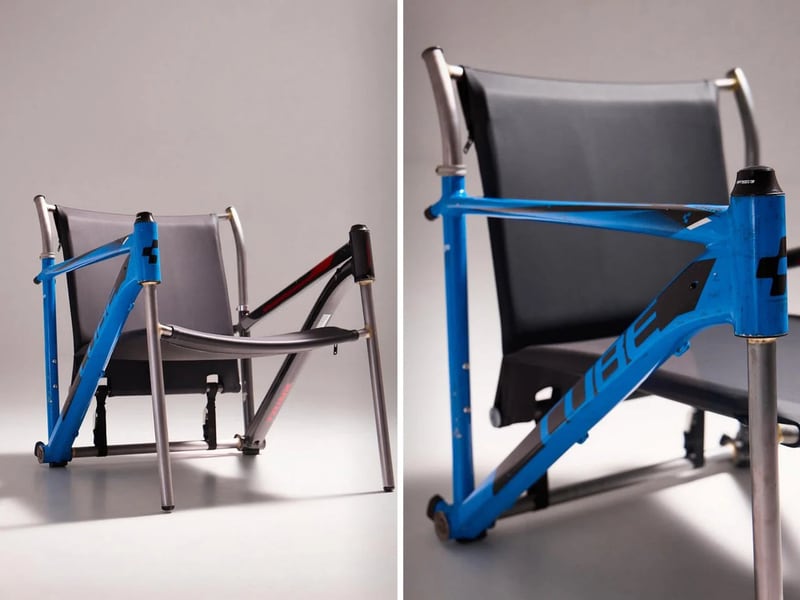
The bike frame chairs by Omri Piko Kahan are lounge seats constructed from pairs of recycled bicycle frames arranged to form a structural base. The project was developed by industrial designer Omri Piko Kahan and keeps the original geometry of each frame visible, including the top tube, head tube, and rear triangle. Each chair uses two frames positioned symmetrically to support a suspended seat and backrest made from leather or canvas.
The frames act as both structure and visual identity, with fork ends and chainstays contacting the ground to form legs. The top tube aligns horizontally to function as an armrest, while triangulated sections provide stability under load. The design relies on the inherent strength of bicycle engineering, with frames originally built to handle repeated stress and impact. Each chair varies depending on the donor bikes used, including combinations from brands such as Cube, Trek, and GT.
Image Credit: Omri Piko Kahan
Why This Trend Is Growing
- Upcycled Structural Design
- Repurposing engineered components as primary load-bearing elements creates opportunities for furniture that leverages pre-tested mechanical performance while reducing material input.
- Visible Authenticity Aesthetics
- Exposed donor geometry and brand-specific cues can become a selling point that blurs the line between product and provenance, enabling high-value, story-driven items.
- Modular Donor-specific Furniture
- Combining matched or mismatched reclaimed parts into repeatable modules enables scalable customization where each final piece retains traceable uniqueness.
Industries Being Reshaped
- Furniture Design
- Design studios and manufacturers could integrate reclaimed mechanical components into mainstream collections, creating structurally confident, narrative-rich products.
- Circular Supply Chains
- Companies managing end-of-life consumer goods may build value by channeling functional subassemblies into secondary markets that demand engineered-quality inputs.
- Hospitality and Boutique Hotels
- Boutique properties and experiential venues could favor furnishings that visually communicate sustainability and provenance as part of guest experience design.