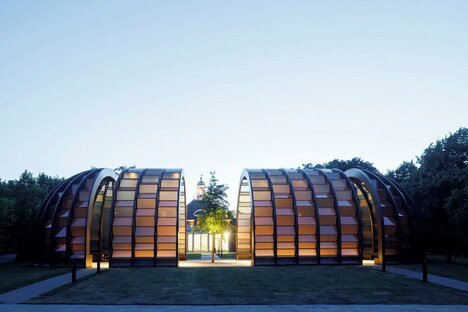
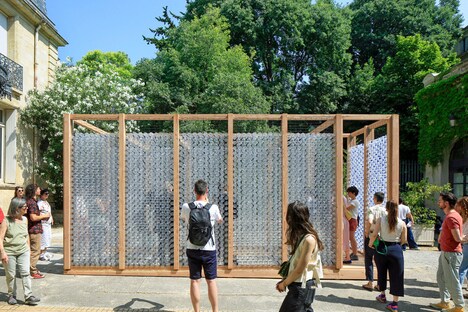
The Tallinn Architecture Biennale has introduced the TAB 2026 Installation Programme Competition, titled 'Budget Bougie.' This exciting venture challenges architects to design a temporary outdoor pavilion in Tallinn’s Rotermann district under significant financial constraints.
The 'Budget Bougie' competition flips the concept of luxury on its head by demanding high-quality spatial experiences from a limited allowance of just under 15,000 Euros. The winning design will be built at full scale in front of the Estonian Museum of Architecture and displayed during the biennale from September 9th to November 30th, 2026.
In an era of rising material costs and environmental awareness, seeing a physical pavilion born from inventive construction methods, traditional techniques, or repurposed everyday Estonian materials offers tangible proof that constraint can drive creativity. The submission deadline for 'Budget Bougie' is April 29th.
Image Credit: Tallinn Architecture Biennale
What Makes This Trend Stand Out
- Constraint-driven Luxury
- High-quality spatial experiences produced under tight budgets reveal new market demand for cost-elegant design methods and resource-efficient aesthetics.
- Repurposed Local Materials
- Materials salvaged from everyday Estonian sources and traditional techniques emerge as low-carbon, culturally resonant inputs for premium architectural expressions.
- Temporary Pop-up Architecture
- Short-term pavilions that deliver memorable, high-impact experiences create a testing ground for modular, transportable systems and ephemeral urban interventions.
Sectors Adopting This
- Architecture and Urban Design
- Design practices focused on affordability and narrative-rich solutions gain traction as clients look for distinctive places created within constrained budgets.
- Construction Materials Manufacturing
- Producers of upcycled, low-cost, and locally sourced building components stand to reshape supply chains toward adaptable, small-batch production models.
- Event and Exhibition Production
- Organizers and fabricators specializing in temporary installations see opportunities in scalable systems that balance visual quality with strict cost ceilings.