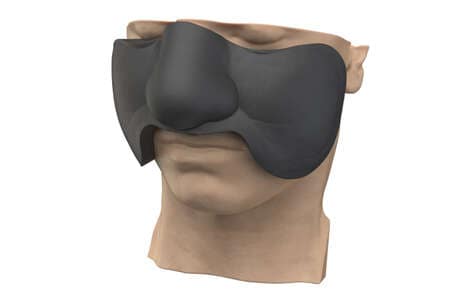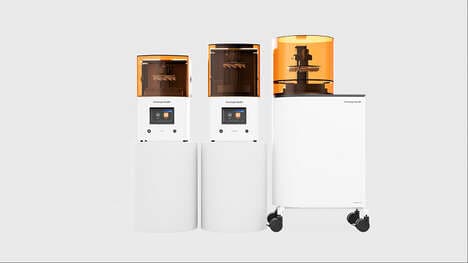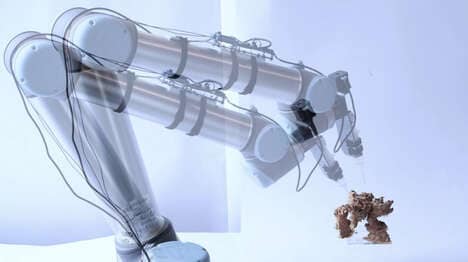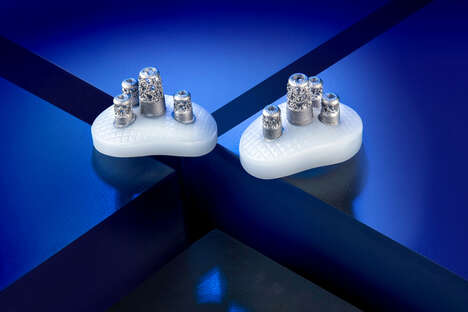
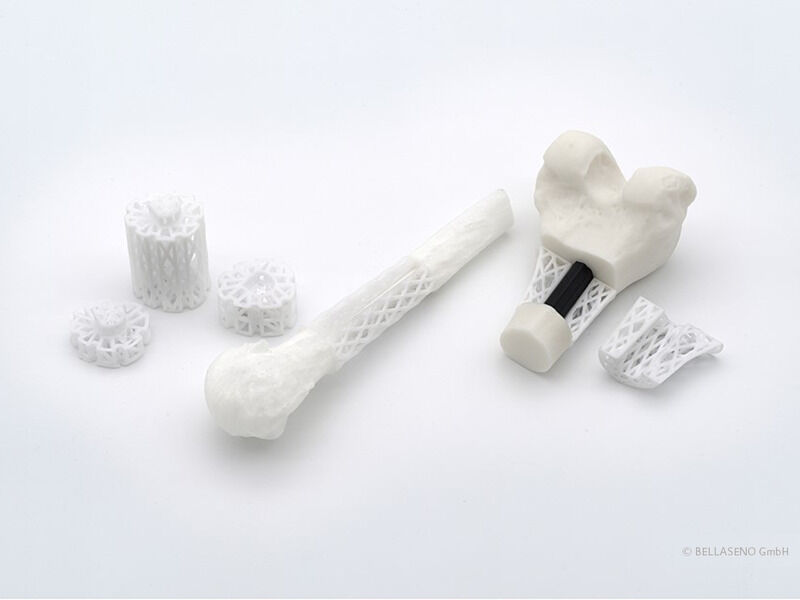
BellaSeno showcased its latest 3D-printing solution that it intends to use to create medical bone implants. The process utilizes either selective laser sintering (SLS) or fused deposition modeling (FDM) based on each job and the required properties of the implant. A study conducted by the company concluded that FDM scaffolds for implants are more mechanically stable, while SLS are have less integrity, but are more versatile in terms of complex design.
BellaSeno's 3D-printing process is scalable and customizable, meaning it can be used en-masse to create bone implant replacements for patients as needed. While the company is not yet ready to deploy this technology, its testing has so far proved promising, showing that the implants are safe and reliable across a number of different scenarios.
Image Credit: BellaSano
Key Themes Behind This Trend
- Scalable 3d-printing
- BellaSeno's customizable 3D-printing process presents opportunities for scalable manufacturing of bone implants.
- Selective Laser Sintering
- The study conducted by BellaSeno highlights the disruptive potential of selective laser sintering technology for creating mechanically stable bone implants.
- Fused Deposition Modeling
- BellaSeno's research reveals the versatility of fused deposition modeling in designing complex bone implants.
Where This Applies
- Medical Devices
- BellaSeno's 3D-printed bone implants have the potential to revolutionize the medical devices industry by offering safe and reliable alternatives.
- Manufacturing
- The scalable and customizable 3D-printing process developed by BellaSeno opens up new possibilities for innovation in the manufacturing industry.
- Healthcare
- The advancements in 3D-printing technology showcased by BellaSeno have significant implications for the healthcare industry, particularly in the field of bone implant replacements.