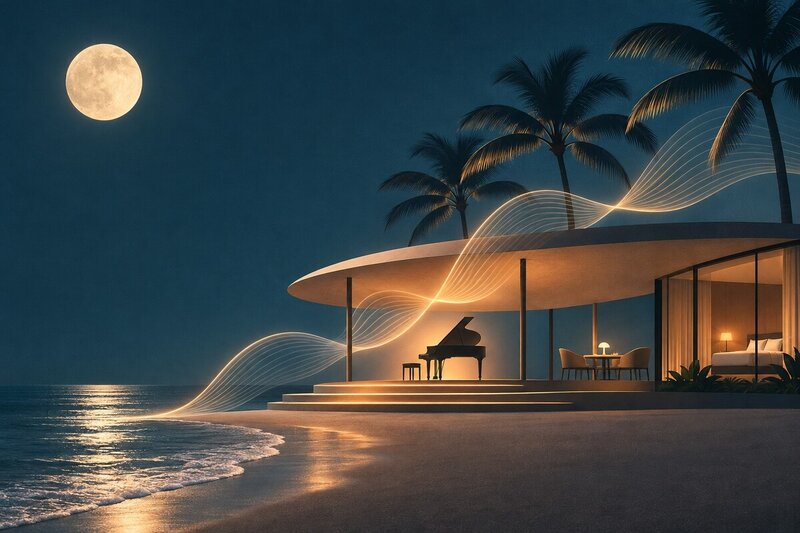
UMusic Beach Clubs & Lifestyle will bring a new beachfront format to South Tulum with ODEA House of Music, opening in late December 2026 beside UMusic Hotel Tulum so guests can move between a stay and music programming in one destination. The project targets travelers and music lovers with a beach club that folds dining and nightlife into the shoreline setting on Mexico’s Caribbean coast.
ODEA is planned for up to 800 guests, with room for live sets and a recording studio. UMusic Hotel Tulum adds 52 rooms and five villas nearby on Carretera Tulum-Punta Allen, keeping the music venue tied to an overnight option instead of a one-off outing.
UMusic shows how pairing an 800-guest beach club with hotel rooms and villas can sell overnight stays alongside performances and dining, while a Zamna collaboration roots the project in Tulum’s electronic scene.
What's Driving This Trend
- Integrated Music Resorts
- Hospitality brands are blending lodging, live performances, dining, and nightlife into single-destination experiences that convert entertainment demand into longer guest stays.
- Beachfront Cultural Hubs
- Coastal venues are evolving beyond leisure spaces into programmed cultural destinations where music, food, and local scene partnerships create premium travel appeal.
- Destination Recording Studios
- On-site creative facilities add a new layer to resort entertainment by attracting artists, fans, and content-driven tourism around music production.
Who This Affects Most
- Hospitality
- Hotels can differentiate through experience-led formats that connect rooms, villas, and branded venues into higher-value lifestyle ecosystems.
- Live Entertainment
- Music operators gain new venue models when performances are embedded within travel destinations rather than limited to standalone clubs or festivals.
- Travel and Tourism
- Destination marketers benefit from hybrid resort concepts that use cultural programming to attract niche traveler communities and extend trip spending.