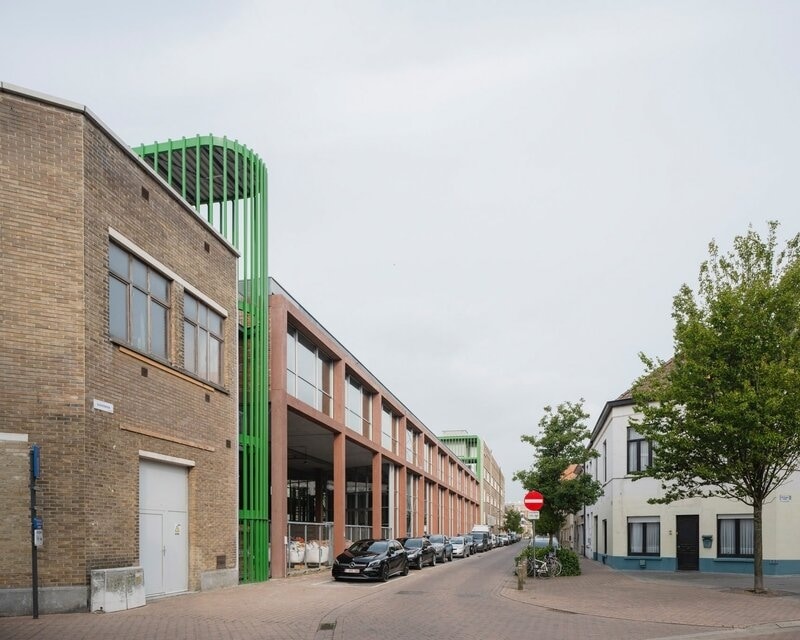
Atelier PPW by NWLND Rogiers Vandeputte and Kris Broidioi creates a flexible creative space that integrates openness, adaptability, and material honesty. Designed for an educational campus, the three-storey structure accommodates workshops for construction and painting within a clear structural grid. Large glass façades connect interior activity to the courtyard and surrounding streetscape, while a cantilevered canopy extends the building’s social reach by offering a sheltered gathering area.
The design prioritizes light and circulation through external staircases and open-plan interiors. Exposed concrete frames, glass infill panels, and subtle planting merge function with aesthetic restraint. The building supports learning through spatial transparency and informal interaction, fostering creativity through architectural clarity. By balancing robustness with warmth, Atelier PPW redefines how educational environments can nurture both discipline and exploration.
Image Credit: Johnny Umans
What Makes This Trend Stand Out
- Flexible Creative Spaces
- Incorporating adaptability in design allows new educational environments to foster greater creativity and collaboration.
- Material Honesty Design
- Using authentic materials in construction can enhance aesthetics while providing practical benefits in campus architecture.
- Architectural Transparency
- Prioritizing transparency through design enhances learning environments by encouraging openness and interaction.
Sectors Adopting This
- Educational Architecture
- Innovations in school building designs are transforming spaces into dynamic learning environments that support modern educational methods.
- Construction Materials
- The use of raw and honest materials in construction is gaining traction, emphasizing both structural integrity and visual appeal.
- Urban Planning
- Urban planning that integrates common spaces with educational institutions is fostering community engagement and interaction.