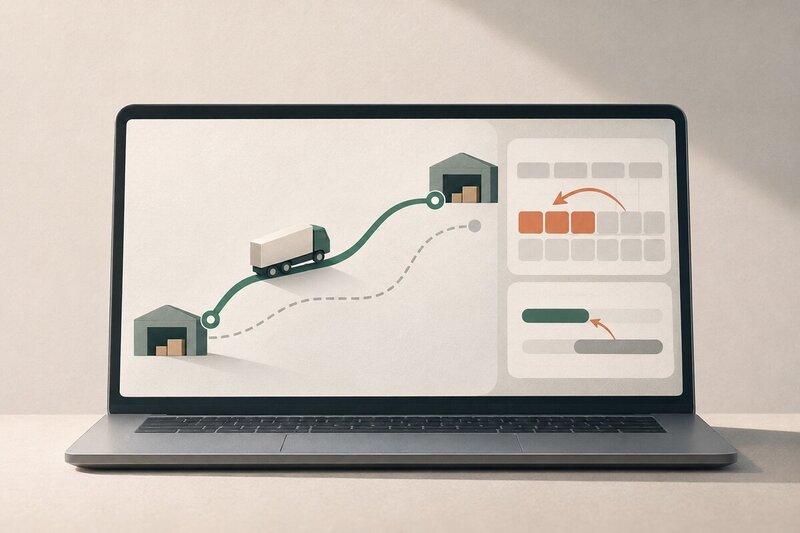
Tradlinx is expanding vessel arrival planning with 'AI-ETA', an arrival-time forecasting feature on its supply chain data platform that predicts destination delays and missed transshipment connections before cargo reaches port. Built for shippers, forwarders and third-party logistics providers across the Americas, it lets teams revise truck bookings, labor plans and production schedules earlier.
In 320 regional cases, the company says AI-ETA reduced last-minute arrival costs by 15.5% on average. Earlier ETA calls give planners time to avoid locking in trucks or labor that no longer align with the vessel's actual arrival. Tradlinx also tested the model on more than 508,000 shipments, where the company says it trimmed ETA error by 31%.
Based on tests covering 320 regional cases and more than 508,000 shipments, Tradlinx shows how AI-ETA can bring earlier arrival forecasts into truck booking, labor and production planning for businesses across the Americas.
Image Credit: AI-generated
Key Themes Behind This Trend
- Predictive Arrival Planning
- AI-powered ETA modeling reveals value in converting uncertain vessel schedules into earlier, more reliable planning signals for transportation, labor, and production teams.
- Exception-based Logistics
- Forecasting missed transshipments and port delays creates room for platforms that prioritize high-risk shipments before operational costs become unavoidable.
- AI Supply Chain Visibility
- Machine learning-enhanced shipment data highlights a shift from passive tracking dashboards toward systems that anticipate disruptions across multimodal networks.
Where This Applies
- Freight Forwarding
- Forwarders gain new differentiation potential from predictive tools that help customers manage bookings, handoffs, and delays with greater precision.
- Third-party Logistics
- Logistics providers can embed arrival intelligence into managed services, making truck capacity, warehouse labor, and customer communication more adaptive.
- Maritime Shipping
- Ocean freight networks are becoming more data-driven as improved arrival forecasts reshape how ports, carriers, and shippers coordinate downstream operations.
Featured Reports

The Smaller Celebration Economy

The Next Innovation Frontier Is Sensory Depth