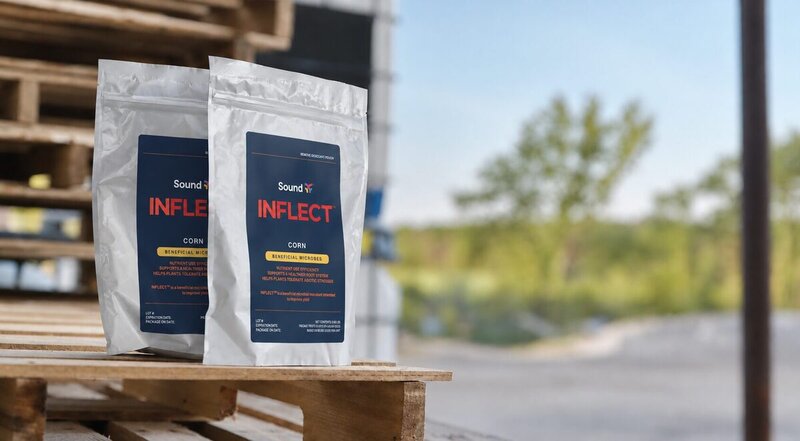
Sound Agriculture created 'INFLECT,' a planter-box treatment for corn seed, dusted on as a powder at planting. It features beneficial microbes for fields fed with anhydrous ammonia or heavy manure. It targets a common tradeoff in corn fertility, where strong nitrogen sources can stress the root zone or delay nutrient availability.
Its microbial blend is designed for the salty conditions associated with high-ammonium fertility, helping maintain pH around young roots rather than leaving seedlings in a harsher pocket of soil. The mix also helps break down manure more quickly, which matters because corn needs nitrogen early, not after the crop's biggest demand window has passed.
For growers, this means a biological input that fits within the planting pass rather than requiring another separate trip across the field. It also points toward fertility programs that prioritize soil biology first, then use synthetic inputs more selectively.
Image Credit: Sound Agriculture
Key Themes Behind This Trend
- Microbial Seed Treatments
- Biological coatings that activate at planting create room for fertility tools that protect early root development while reducing dependence on additional field passes.
- Ammonium-stress Buffering
- Root-zone pH stabilization in high-nitrogen soils signals potential for inputs that make aggressive fertility programs less damaging to seedlings.
- Manure Nutrient Acceleration
- Faster biological breakdown of manure opens pathways for aligning organic nutrient release with peak crop demand windows.
Where This Applies
- Agricultural Biotechnology
- Microbe-based crop inputs are expanding the category beyond pest control into fertility optimization and soil-condition management.
- Seed Treatment
- Planter-box compatible powders suggest new value for seed-adjacent products that combine convenience with biological performance benefits.
- Fertilizer and Soil Inputs
- Hybrid fertility systems blending synthetic nitrogen, manure, and biological buffers point to more precise nutrient management models.