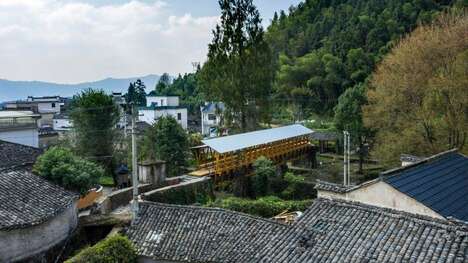
OAK Architects created this stunning Accoya wood bridge in the city of Sneek located in the Netherlands. Accoya wood is a trademarked material from Titan Wood that is manufactured with a process called wood acetylation. Sustainable timber is recycled with a molecule that naturally occurs in all tree species, resulting in a high performance, eco-friendly product with super strength and an extended lifespan.
Back to the Sneek bridge. It spans 105 feet, is 50 feet high and can carry a load of 60 tons, making it the first wooden bridge in the world to be able to hold such massive weight.
The OAK designed bridge cost €3.5 million and was constructed by Schaffitzel Holzindustrie from Germany.
What Makes This Trend Stand Out
- Eco-friendly Material
- The use of Accoya wood showcases opportunities for businesses to develop sustainable building materials for construction projects.
- High Load-bearing Structures
- The Akkerwinde Bridge demonstrates the potential for wooden bridges to support heavy loads, presenting an opportunity for engineering companies to create innovative and cost-effective infrastructure solutions.
- Wood Acetylation Process
- The adoption of wood acetylation processes like those used to create Accoya wood highlights possibilities for manufacturers to enhance the strength and durability of timber-based products, leading to disruptive advancements in the industry.
Sectors Adopting This
- Construction
- The construction industry can explore the use of eco-friendly materials, like Accoya wood, to create sustainable structures with improved strength and longevity.
- Engineering
- Engineers can leverage the load-bearing capabilities of wooden bridges, as demonstrated by the Akkerwinde Bridge, to develop innovative and cost-effective infrastructure solutions.
- Timber Manufacturing
- Timber manufacturers can employ wood acetylation processes to enhance the strength and durability of their products, opening doors for disruptive advancements in the industry.