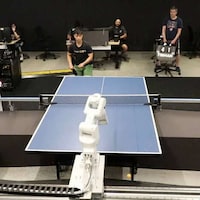
Jose Julio loves robotics, and his daughter loves playing air hockey, so it only made sense for him to build an ingenious robot that could play air hockey with his little princess.
Julio modified 3D printer parts to build the robot, and used a PS3 Eye to enable video capture and detection.
As of now, the robot is proficient enough at air hockey to beat a child, but doesn’t yet have enough game to beat a serious adult. Julio says he plans to keep working on the robot to make it a better competitor.
Julio has put up a manual containing all the codes and hacks he used for the project, so others can try replicating it. He has also invited coding and robotics tips from other enthusiasts who want to help improve his air-hockey robot.
Why This Trend Is Growing
- Robotic Gaming
- The trend of creating robots that can play games, like air hockey, is on the rise, offering opportunities for innovative gaming experiences.
- DIY Robotics
- The trend of using 3D printer parts and open-source codes to build robotics projects is growing, allowing for accessible and customizable robot creations.
- Collaborative Robotics
- The trend of inviting contributions and tips from other enthusiasts for improving robotics projects fosters a collaborative and innovative robotics community.
Industries Being Reshaped
- Gaming and Entertainment
- The gaming industry could explore integrating robotic players into games to enhance user experiences and create new types of interactive gameplay.
- Manufacturing and Robotics
- The manufacturing industry can leverage the use of 3D printer parts and open-source resources to develop cost-effective and customizable robotic solutions for various applications.
- Education and Robotics
- The education industry can capitalize on the DIY robotics trend by incorporating robotics projects into curricula, encouraging students to develop problem-solving and technical skills.