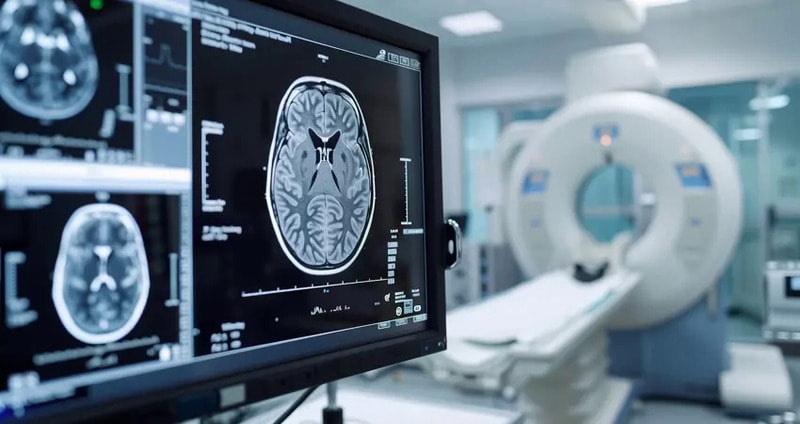
A groundbreaking interdisciplinary collaboration has yielded an innovative AI-powered forensic tool that could transform how traumatic brain injuries are investigated in criminal cases. Developed by researchers from the University of Oxford alongside law enforcement and medical partners, this physics-informed machine learning system analyzes assault scenarios to predict the likelihood of specific traumatic brain injury outcomes with notable accuracy.
The AI-powered forensic tool framework combines biomechanical simulations of head impacts with contextual forensic data from police reports. Reportedly, the analysis estimates 94% accuracy in predicting skull fractures and 79% accuracy for both loss of consciousness and intracranial hemorrhages.
Unlike traditional forensic methods that rely heavily on subjective interpretation, this tool provides quantitative, evidence-based assessments by modeling how different impact forces affect brain tissue and cranial structures, while incorporating variables like victim age and physical characteristics.
Image Credit: University of Oxford
What's Driving This Trend
- AI-driven Forensic Analysis
- This trend signifies a shift towards integrating AI into forensic science, offering substantial improvements in precision and reliability over traditional methods.
- Physics-informed Machine Learning
- Machine learning models that incorporate physics simulations provide nuanced insights into complex real-world scenarios, such as predicting the outcomes of head impacts with high accuracy.
- Quantitative Forensic Assessments
- The move to evidence-based, computational assessments in forensics challenges the status quo by minimizing subjective interpretations in criminal investigations.
Who This Affects Most
- Forensic Technology
- The implementation of AI-powered tools is revolutionizing forensic practices, enabling more accurate investigations of incidents like traumatic brain injuries.
- Healthcare Informatics
- Incorporating AI models into medical assessments opens new avenues for diagnosing and understanding complex injuries with improved predictive capabilities.
- Law Enforcement Technology
- Advanced forensic tools equipped with AI support law enforcement in conducting more precise and data-driven investigations into criminal activities.