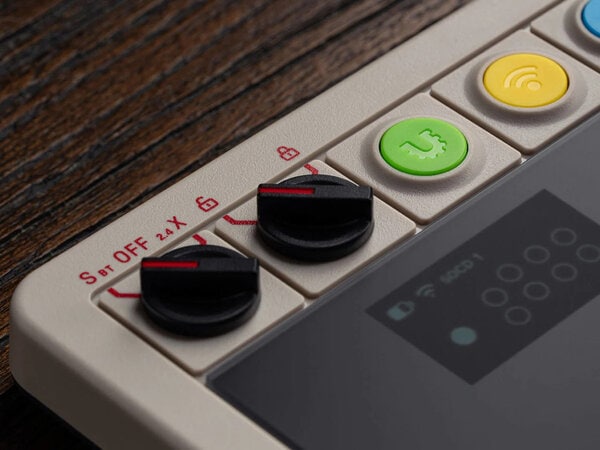
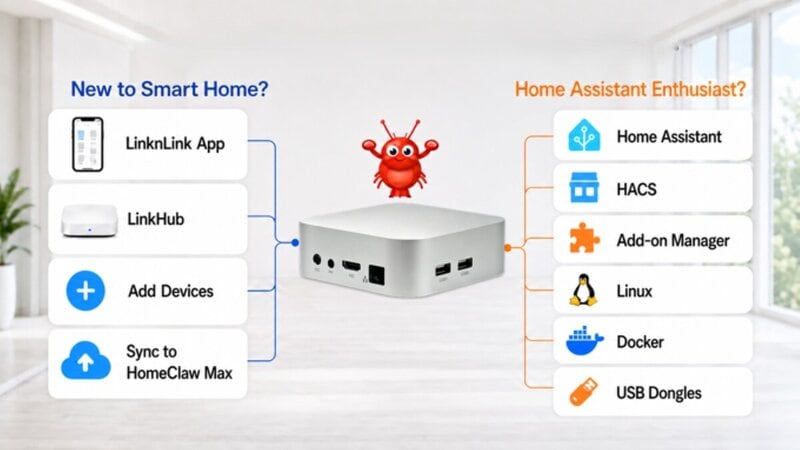
LinknLink's HomeClaw Max is a mini-PC that brings Home Assistant together with the OpenClaw AI assistant. It gives smart home fans a ready-made box for setup, control, and programming without starting from scratch.
The device comes with either the Hermes Agent or OpenClaw, both designed to handle setup tasks by taking plain-language instructions and turning them into working smart home routines. It comes with 4 GB of RAM and a four-core CPU running at 1.8 GHz. Power use is said to stay between 3 and 5 watts, which suits a system meant to run all day.
The draw here is convenience: instead of piecing together software and hardware yourself, the box aims to make home automation feel more guided. That mix of DIY flexibility and AI help reflects where smart home gear is heading next, toward simpler setup without giving up control.
Image Credit: LinknLink
What Makes This Trend Stand Out
- AI-guided Home Automation
- Plain-language assistants that translate user intent into routines create room for more accessible, customizable smart home ecosystems.
- Ready-made DIY Platforms
- Preconfigured hardware-software bundles bridge enthusiast flexibility with mainstream convenience, reshaping how consumers adopt home automation.
- Low-power Edge Intelligence
- Always-on mini-PC hubs with efficient AI capabilities support localized control, privacy-focused processing, and reduced cloud dependence.
Sectors Adopting This
- Smart Home Technology
- Integrated AI hubs expand the market for simplified automation systems that retain advanced personalization for connected households.
- Consumer Electronics
- Compact, energy-efficient devices combining compute power and assistant software signal new product categories for everyday intelligent infrastructure.
- Home Improvement
- Guided automation tools introduce digital upgrade pathways that complement traditional renovations with programmable comfort, security, and efficiency.