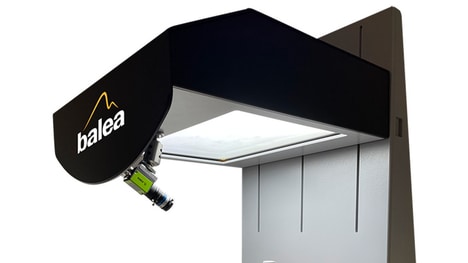
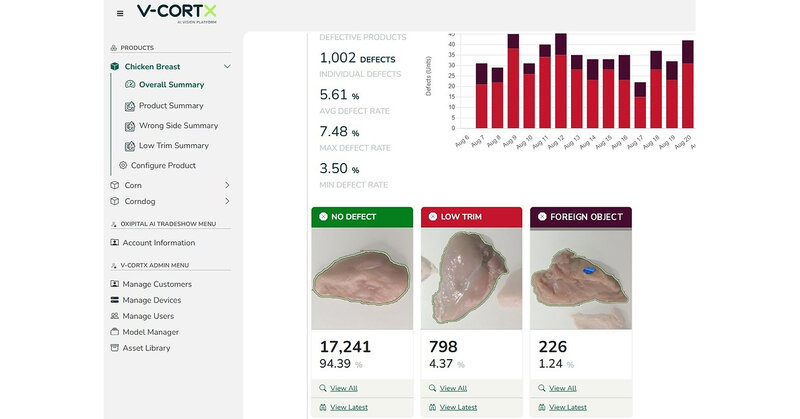
Oxipital AI has introduced AI-powered contaminant detection that allows food manufacturers to identify unwanted materials and respond automatically during production. Unlike conventional inspection tools that only flag potential problems, the system classifies contaminants and communicates with production controls to slow or stop equipment when necessary, helping prevent affected products from continuing through the line.
The technology uses synthetic data generation, which creates simulated examples of contaminants to train detection models before deployment. It recognizes visible materials such as plastic, wood, metal, and bone, with reported accuracy reaching up to 99%. Its V-CORTX platform also records detection images, timestamps, and classifications for further analysis.
For manufacturers, the system could reduce manual inspection demands, limit unnecessary interruptions, and improve safety documentation. Compatibility with existing Oxipital AI hardware may also simplify adoption while reducing the need for additional inspection providers.
Image Credit: Oxipital AI Inc.
Key Themes Behind This Trend
- Autonomous Quality Control
- Production lines equipped with AI inspection and machine response capabilities are reshaping quality assurance through faster containment of safety risks and fewer manual review bottlenecks.
- Synthetic Data Training
- Simulated contaminant examples are expanding the reliability of machine vision systems by reducing dependence on rare real-world defect images during model development.
- Real-time Traceability
- Automated image capture, timestamps, and classification records are creating richer production histories that support compliance, recalls, and continuous process optimization.
Where This Applies
- Food Manufacturing
- AI-enabled contaminant classification is introducing safer, more responsive production environments where defective products can be isolated before reaching downstream packaging.
- Industrial Automation
- Machine vision systems that communicate directly with production controls are opening new value in adaptive equipment that responds dynamically to operational risk.
- Food Safety Technology
- Integrated detection platforms are advancing beyond alert-based inspection toward documented, automated prevention systems for manufacturers managing contamination exposure.