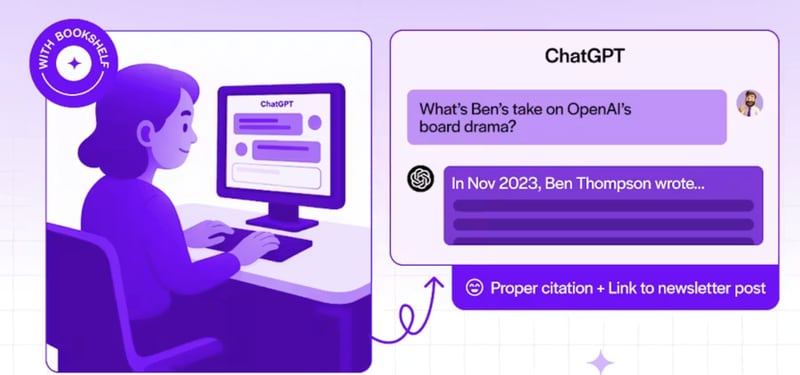
Newsletters often contain valuable insights and information, but finding specific content within large archives can be time-consuming. Bookshelf transforms newsletter collections into custom GPT-powered assistants, allowing readers to interact with past content through natural conversations. Users can ask questions, explore topics, and receive answers based on the newsletter archive rather than general web results.
Designed for creators, publishers, and newsletter owners, the platform provides a simple way to make existing content more accessible and engaging. With no coding required, creators can set up an interactive archive experience quickly and help audiences discover more value from their previous writing. Whether revisiting expert analysis, researching past editions, or exploring recurring themes, Bookshelf gives readers a smarter way to engage with newsletters. The platform helps turn static archives into dynamic knowledge resources powered by AI.
Image Credit: Bookshelf
What Makes This Trend Stand Out
- Conversational Content Archives
- Static back catalogs gain new utility when natural-language interfaces turn buried articles, newsletters, and reports into searchable knowledge experiences.
- No-code AI Publishing Tools
- Creator-focused platforms are lowering technical barriers by packaging custom AI assistants into simple setup flows for content monetization and audience engagement.
- Source-grounded Knowledge Chat
- Answer systems tied to owned archives create differentiated alternatives to general search by prioritizing trusted, context-specific material.
Sectors Adopting This
- Digital Publishing
- Publishers can extend the lifespan of archived content as interactive discovery layers reshape how audiences access editorial value.
- Creator Economy
- Independent writers and newsletter operators gain new engagement formats as AI transforms existing libraries into personalized reader experiences.
- Knowledge Management
- Organizations with large internal or external content repositories benefit from archive-based assistants that convert accumulated information into conversational resources.