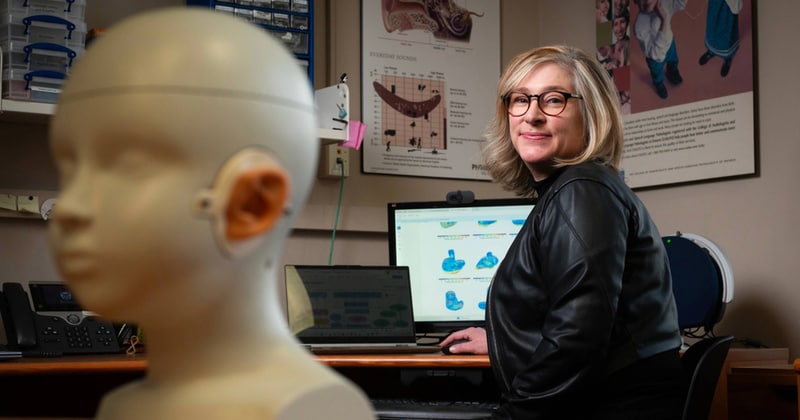
AI-driven medical manufacturing is transforming how personalized healthcare solutions are produced, as seen in the ALLEars project’s use of AI and 3D printing for pediatric hearing aids. By digitally scanning a child’s ear and using AI to predict future growth, healthcare providers can create earmolds in advance rather than reacting to constant changes. This reduces interruptions in care, minimizes repeated appointments and ensures more consistent hearing support during critical developmental stages.
This approach enables more efficient and scalable production of customized medical devices. On-demand manufacturing lowers turnaround times and operational costs, while predictive capabilities improve patient outcomes and satisfaction. It also creates opportunities to expand access in underserved regions through decentralized production. Overall, this reflects a shift toward more proactive, data-driven healthcare systems focused on efficiency, accessibility and long-term value.
Image Credit: Iulia Costache/Western Health Sciences
What Makes This Trend Stand Out
- Predictive Prosthetic Fitting
- AI-driven growth forecasting enables creation of prosthetics and inserts that remain effective over developmental windows, reducing the frequency of refitting.
- On-demand 3D Medical Printing
- Localized additive manufacturing allows rapid production of patient-specific devices with lower inventory costs and faster delivery timelines.
- Decentralized Healthcare Manufacturing
- Shifting production closer to point-of-care supports broader access in underserved regions through smaller-scale, networked fabrication hubs.
Sectors Adopting This
- Audiology Devices
- Predictive modeling and printing create opportunities for hearing aids and earmolds that accommodate anticipated anatomical changes across childhood.
- Pediatric Care
- Continuity of medical device fit and function during growth phases could improve developmental outcomes and reduce care interruptions for young patients.
- Medical Supply Chain
- Distributed manufacturing and on-demand production have the potential to compress lead times and lower logistical dependencies for custom medical products.