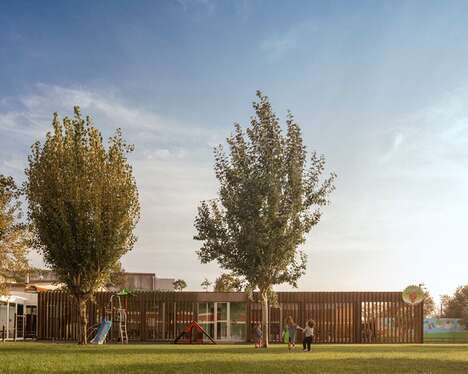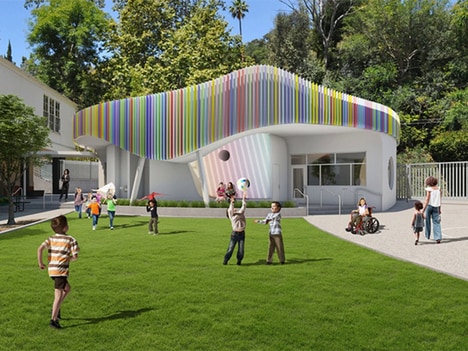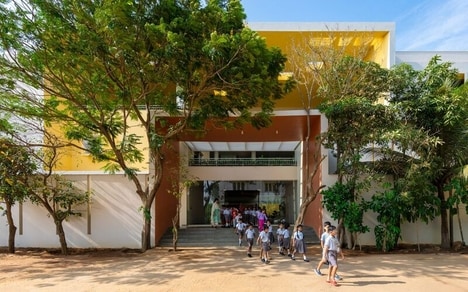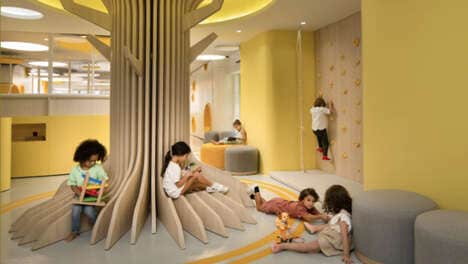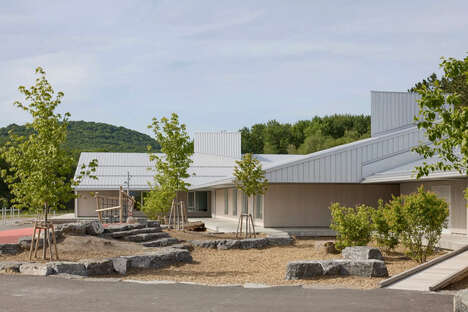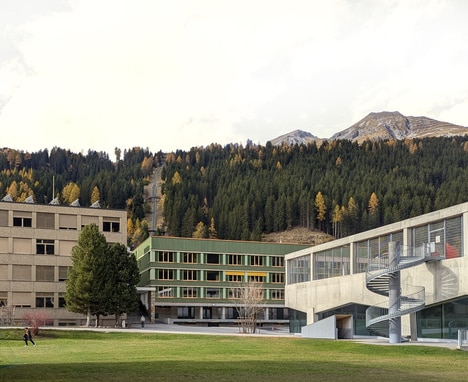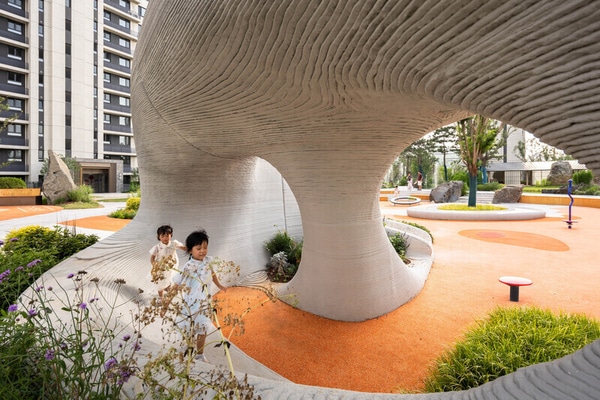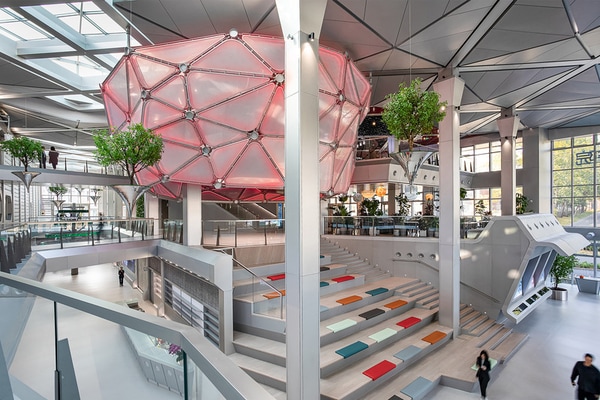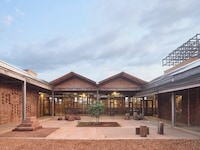
The African Flow Kindergarten in Soa, Cameroon, represents a thoughtful convergence of educational philosophy, cultural identity, and sustainable architecture. Designed by Vicente Guallart and Daniel Ibáñez of Urbanitree, the 1,600-square-meter facility reimagines early learning environments by organizing spaces around four symbolic ecosystems — mountain, village, savanna, and forest. Each is tailored to foster specific developmental activities.
The layout of the African Flow Kindergarten encourages fluid movement between zones, promoting experiential learning through tactile engagement with the built environment. Constructed primarily from locally sourced materials like azobé wood and rammed earth, the project prioritizes low-tech, low-carbon methods. During the construction phases, Cameroonian workers were simultaneously trained in wood construction techniques that are typically unfamiliar in the region. The design integrates passive strategies such as perforated earth-brick walls for natural ventilation and light filtration, alongside a photovoltaic-clad water tower to ensure energy and water resilience.
Image Credit: Adrià Goula
Key Themes Behind This Trend
- Ecosystem-centric Learning Spaces
- Designing educational facilities around distinct ecosystems offers novel ways to stimulate diverse skill sets and developmental growth in children.
- Sustainable Construction Practices
- Utilizing local materials and low-tech construction techniques in educational architecture reduces carbon footprints and supports community empowerment.
- Passive Design for Climate Control
- Incorporating passive architectural elements like ventilation walls and photovoltaic systems ensures energy-efficient, climate-responsive building designs.
Where This Applies
- Educational Architecture
- Design innovations in educational spaces are reshaping how young learners interact with physical environments, promoting holistic educational philosophies.
- Sustainable Building Materials
- Local sourcing and application of eco-friendly materials signal a shift towards environmentally responsible construction practices across various sectors.
- Renewable Energy and Water Systems
- Integrating renewable energy solutions and sustainable water management within architecture is redefining how urban structures achieve resource independence.