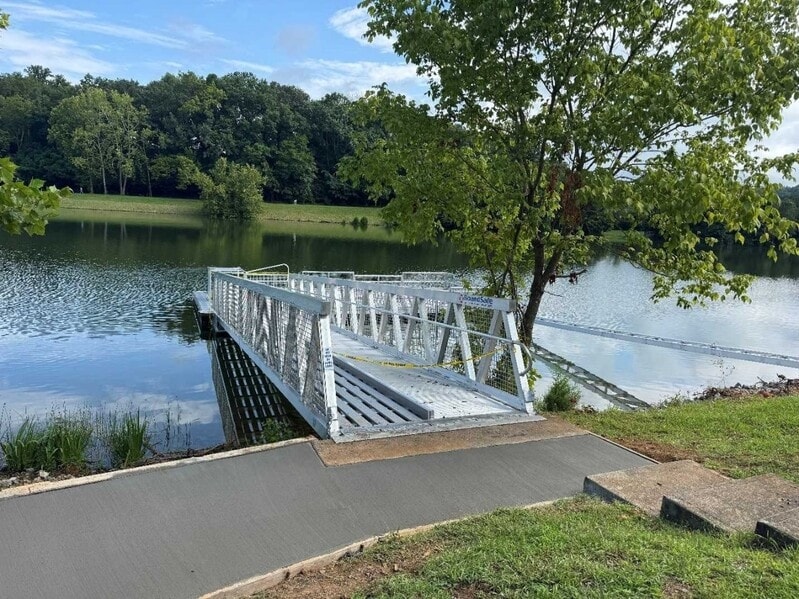
The Tennessee State Parks system has installed three new accessible paddling launches, which are designed to assist individuals with physical disabilities in entering and exiting non-motorized watercraft such as kayaks and canoes. These specialized launches incorporate features like a transfer bench, supportive structures with handholds, and pull bars to aid in the transition from a mobility device into a vessel.
With the three accessible paddling launches, the total number of state parks in Tennessee offering such accessible water access points has increased to eight. This initiative is part of a broader departmental effort to enhance accessibility and remove barriers for individuals who wish to partake in recreational activities. Tennessee State Parks also provides all-terrain wheelchairs and modifies trails and viewing areas to accommodate visitors with mobility challenges.
Image Credit: Tennessee State Parks
What's Driving This Trend
- Inclusive Outdoor Recreation
- Advancements in inclusive infrastructure, such as accessible paddling launches, are reshaping how individuals with disabilities can enjoy outdoor activities.
- Adaptive Watercraft Technology
- Innovation in adaptive watercraft systems, like those with specialized launching features, opens new avenues for exploration and adventure for people with mobility issues.
- Barrier-free Tourism
- The movement towards barrier-free tourism emphasizes the need for travel destinations to develop facilities that cater to visitors of all physical capabilities.
Who This Affects Most
- Assistive Device Manufacturing
- Growing demand for specialized equipment in parks and recreation, such as all-terrain wheelchairs and transfer benches, suggests a significant market for assistive device manufacturers.
- Recreational Facility Design
- The increasing focus on designing recreational facilities that are accessible to all highlights the trend towards universally inclusive public infrastructure.
- Tourism and Travel Services
- The push for more accessible travel experiences underscores opportunities in the tourism and travel industry to cater to a wider range of clients with varied accessibility needs.