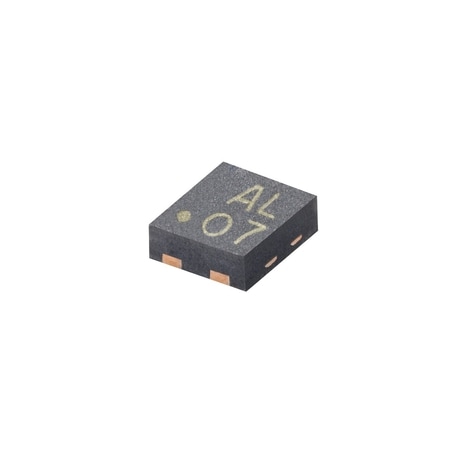

Texas Instruments introduced the BQ79731-Q1, a battery monitoring chip designed to improve safety in electric vehicle and energy storage systems through integrated electrochemical impedance spectroscopy (EIS). The single-chip solution can monitor up to 26 individual battery cells, performing real-time impedance analysis to detect changes in internal resistance and capacitance that may indicate degradation or developing faults.
The device supports daisy-chain communication for high-voltage battery packs and is designed to integrate with existing battery management systems using TI reference designs. By embedding EIS directly into the monitor, the chip provides deeper insight into battery health than traditional voltage-only monitoring, helping identify potential issues before they escalate into thermal runaway events.
For manufacturers and operators, the technology supports predictive maintenance, improved reliability and lower warranty costs. The launch reflects growing demand for advanced battery diagnostics as EV and grid-scale storage deployments continue to expand.
Image Credit: Shutterstock/thetahoeguy
Why This Trend Is Growing
- Embedded Battery Diagnostics
- Single-chip impedance monitoring creates room for safer battery platforms that detect degradation patterns before conventional voltage-based systems reveal risk.
- Predictive Thermal Safety
- Real-time analysis of cell resistance and capacitance supports new safety architectures that anticipate thermal runaway conditions in high-density energy systems.
- Health-aware Battery Management
- Integrated electrochemical sensing expands battery management from basic supervision into continuous condition intelligence for longer-lasting electric and storage assets.
Industries Being Reshaped
- Electric Vehicles
- Automakers benefit from deeper cell-level visibility that can improve pack reliability, reduce warranty exposure and differentiate EV safety performance.
- Energy Storage
- Grid-scale storage operators gain a pathway to more dependable uptime through early fault detection across large, high-voltage battery installations.
- Semiconductors
- Chipmakers are positioned to capture value by embedding advanced electrochemical analytics into compact monitoring components for electrification markets.