Edge AI IoT devices are compact connected units that process data locally rather than routing raw telemetry to the cloud. Industry vendors including MediaTek and Texas Instruments introduced named platforms in 2026, featuring on-device inference and generative capabilities designed to run without continuous cloud links. These launches responded to rising cloud costs and a constrained memory supply, making local intelligence a practical alternative.
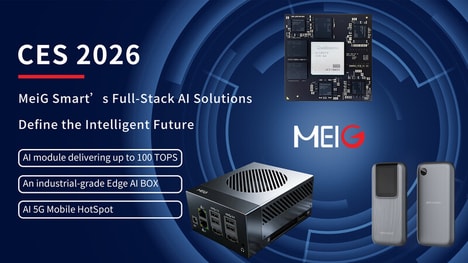
Manufacturers unveiled specific hardware and modules for cost-sensitive use cases: MediaTek’s Genio platform targeted smart retail point-of-sale and inventory systems, while TI focused on Series 3-class IoT silicon and scale manufacturing to lower per-unit cost. Platform partners such as SECO and Edge Impulse showed modules and management tools that simplify deployment across diverse device fleets.
For enterprises, devices that analyze and act locally reduce ongoing cloud bills, shrink bandwidth demands and enable subscription-ready features like anomaly detection and predictive maintenance. As component economics force design choices, edge AI shifts from premium add-on to standard product strategy for retail, industrial and healthcare IoT.
Image Credit: MediaTek
What Makes This Trend Stand Out
- On-device Generative AI
- Embedded generative models enable rich local content synthesis and contextual responses without recurring cloud compute costs, opening room for new device-level services and subscription models.
- Local Inference Standardization
- Unified runtime and management tools that run across heterogeneous modules reduce integration complexity and create platforms that can scale IoT intelligence like conventional software ecosystems.
- Cost-optimized Edge Hardware
- Economies of scale in Series-3 class silicon and modular platforms shift advanced AI capabilities into low-cost devices, enabling mass-market deployments that were previously cost-prohibitive.
Sectors Adopting This
- Retail Point-of-sale
- Smart POS systems with on-device vision and inventory inference can provide real-time loss prevention and personalized checkout experiences while minimizing latency and data transfer fees.
- Industrial Predictive Maintenance
- Edge AI-equipped sensors that detect anomalies and predict failures locally can significantly lower downtime and remote diagnostics overhead for large distributed industrial fleets.
- Healthcare Remote Monitoring
- Wearables and bedside monitors performing on-device analysis of physiological signals enable continuous, privacy-preserving monitoring and quicker localized clinical decision support.