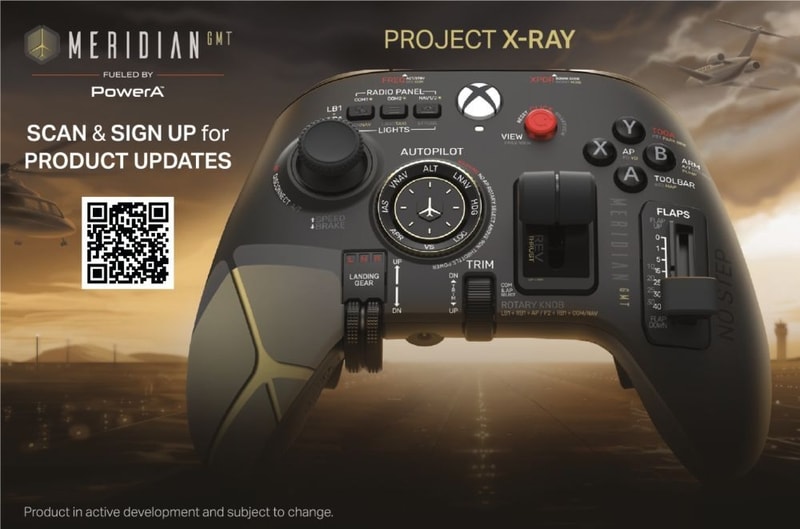
Modular flight controllers are expanding access to immersive flight simulation by combining interchangeable controls into a single handheld system. PowerA and Meridian GMT's Project X-Ray Flight Deck Wireless Controller features swappable throttles, flaps, and faceplates that allow users to quickly configure the device for airplanes or helicopters without purchasing separate peripherals. The modular design delivers a cockpit-inspired experience while maintaining the familiarity and convenience of a traditional game controller, making advanced simulation more accessible to a wider audience.
For gaming hardware manufacturers, modular accessories create opportunities to build expandable product ecosystems that encourage long-term customer engagement. A single platform that supports multiple simulation styles can reduce costs for players while increasing opportunities for future accessory sales. As simulation gaming continues to grow, adaptable hardware that balances authenticity, flexibility, and ease of use is becoming an increasingly important way for brands to differentiate themselves in the gaming accessories market.
Image Credit: PowerA
Key Themes Behind This Trend
- Modular Simulation Hardware
- Interchangeable control components are creating more affordable pathways to specialized simulation experiences while enabling brands to extend product lifecycles through expandable ecosystems.
- Hybrid Controller Design
- Cockpit-inspired inputs combined with familiar handheld formats reveal a market opportunity for immersive peripherals that reduce the learning curve for mainstream players.
- Configurable Gaming Ecosystems
- Accessory platforms built around swappable modules support recurring revenue models as users personalize devices for different vehicles, genres, and skill levels.
Where This Applies
- Gaming Accessories
- Manufacturers are positioned to differentiate through adaptable hardware systems that blend authenticity, convenience, and long-term upgrade potential.
- Flight Simulation
- More accessible control formats are broadening participation in advanced simulation, creating demand for peripherals that serve both enthusiasts and casual users.
- Consumer Electronics
- Modular device architectures signal new growth potential for customizable hardware that balances premium functionality with mass-market usability.