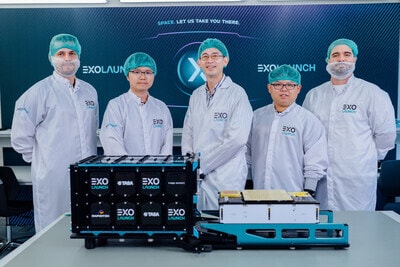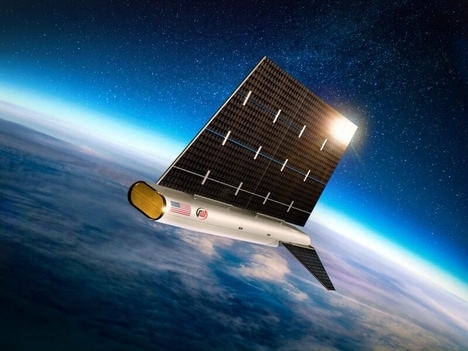
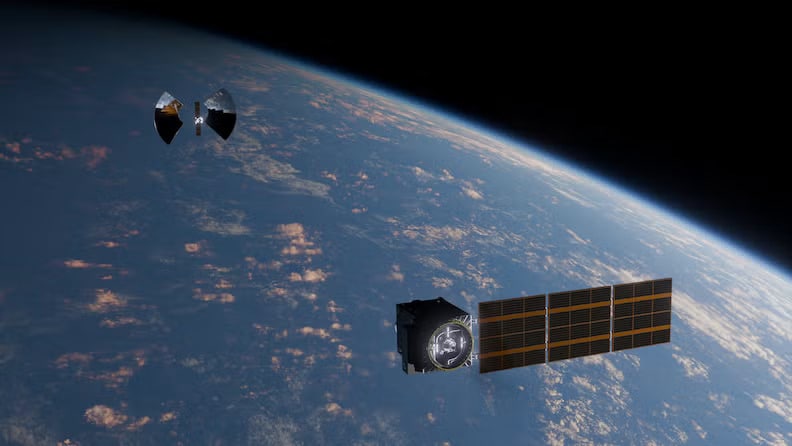
Portal Space Systems introduced a new class of maneuverable spacecraft, featuring solar thermal propulsion, to enable rapid repositioning in orbit. The company announced a $50 million Series A and recently gained flight heritage for its avionics on a Momentus-hosted demo launched on SpaceX’s Transporter-16 mission.
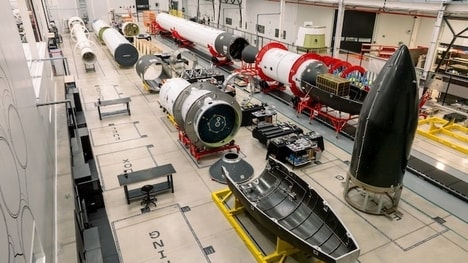
The startup is developing the Starburst ESPA-class rapid-maneuverability spacecraft, with its first Starburst slated for Transporter-18 in Q4 2026, and a larger Supernova vehicle planned for 2027. Portal said the funding, led by Geodesic Capital and Mach33, will expand engineering teams and support the construction of a 52,000 sq ft production facility in Bothell, Washington, to scale manufacturing.
For defense and commercial operators, these platforms aim to deliver repeatable, agile on-orbit repositioning and thermal management, addressing rising concerns about adversarial maneuvering and dense orbital traffic. Scaling to production signals a shift from prototype demonstrations to operational mission capability.
Image Credit: Portal Space Systems
Why This Trend Is Growing
- Rapid Maneuverable Spacecraft
- New classes of agile, ESPA-class platforms enable persistent proximity operations and dynamic repositioning that could redefine satellite tasking and responsive space services.
- Solar Thermal Propulsion Adoption
- Emerging solar-thermal propulsion systems offer higher-efficiency, long-duration thrust profiles that may disrupt traditional electric and chemical propulsion choices for many orbital missions.
- On-orbit Production Scaling
- The move from prototypes to factory-scale production and larger vehicle variants suggests economies of scale and standardization that could shift cost structures across the small-to-medium satellite market.
Industries Being Reshaped
- Defense and National Security
- Orbitally agile platforms present capabilities for resilient space situational awareness and maneuver-based deterrence that could transform tactical force posture in contested space environments.
- Commercial Satellite Operators
- Operators managing constellations may see new business models emerge as rapid-repositioning vehicles enable on-demand service relocation and extended asset utility in crowded orbits.
- Space Manufacturing and Logistics
- Scaling production facilities and standardized spacecraft families could create downstream markets for integrated supply chains, in-orbit servicing, and rapid deployment logistics.