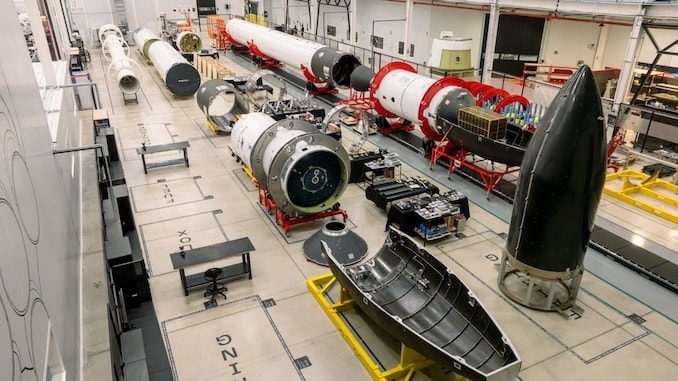
Spanish launch firm PLD Space unveiled the Miura 5, a medium‑lift rocket designed for partial reusability, featuring an ocean‑recovery system for its first stage and targeting an inaugural flight in 2026. The Series C round that backed the rollout raised €180 million, led by Mitsubishi Electric Corporation, with participation from Spanish public funds and Nazca Capital.
The Miura family includes Miura 1, Miura 5 and the Miura Next variants that scale to heavy and super‑heavy configurations with propulsive landing tech planned for later versions. Mitsubishi Electric’s €50 million stake also secured it priority access to Miura 5 launches to support satellite constellation deployments.
For satellite operators, Miura 5 promises more frequent, lower‑cost access to orbit and builds European launch redundancy as demand rises. PLD Space’s funding push and recovery-focused design position the company to scale production and increase launch cadence toward its goal of 30+ flights per year by 2030.
Image Credit: PLD Space
What Makes This Trend Stand Out
- Reusable Medium-lift Rockets
- A shift toward partially reusable medium‑lift vehicles could drive economies that lower per‑launch costs and increase payload cadence for regional operators.
- Ocean-recovery Systems
- Recovery architectures optimized for sea landings may enable rapid turnarounds and distributed recovery networks that reduce infrastructure overhead.
- Regional Launch Redundancy
- Growing investment in Europe‑based launch capacity is creating alternative access corridors that mitigate geopolitical risk for satellite deployment strategies.
Sectors Adopting This
- Satellite Constellation Operators
- Operators planning large constellations stand to benefit from more frequent, lower‑cost medium‑lift launches that alter launch scheduling and procurement economics.
- Launch Vehicle Manufacturing
- Manufacturers developing scalable families of rockets may capture new market segments by standardizing reusable first stages and modular upper stages to accelerate production.
- Spaceport and Recovery Logistics
- Companies providing port infrastructure, marine recovery, and refurbishment services could emerge as critical nodes that shorten turnaround times and support higher launch cadences.