
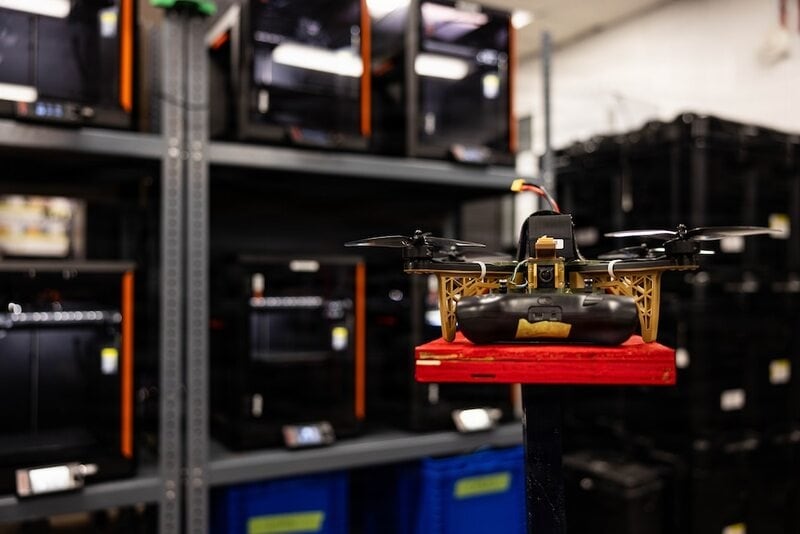
The U.S. Marine Corps unveiled HANX, its first National Defense Authorization Act (NDAA)-compliant 3D-printed drone, developed by the 2nd Marine Logistics Group and led by Sgt. Henry David Volpe. The platform was created with NDAA-approved components, featuring a modular airframe designed to resist supply-chain intrusions and backdoor software threats.
Development took about 90 days and more than 1,000 work hours, producing five major prototypes before the final build; the project received interim flight clearance from NAVAIR. HANX is modular for roles from reconnaissance to logistics and was produced at the II Marine Expeditionary Force Innovation Campus, which trains Marines in additive manufacturing and maintenance.
For units, HANX delivers a lower-cost, service-built alternative to contractor systems, enabling on-site fabrication, faster iteration and mission-specific customization. Its debut highlights a trend toward field-printed, secure military hardware that reduces reliance on external suppliers while expanding unit-level capabilities.
Image Credit: U.S. Marine Corps
What Makes This Trend Stand Out
- Field-printed Military Hardware
- Lower-Cost, On-Site Fabrication Models Capable Of Producing Mission-Specific UAVs And Equipment That Reduce Reliance On External Suppliers.
- Modular Secure Platforms
- Airframes Built From NDAA-Approved, Modular Components Designed To Minimize Supply-Chain Intrusion And Isolate Vulnerable Subsystems.
- Rapid Iterative Prototyping
- Short Development Cycles With Multiple Prototypes Enabling Faster Capability Maturation And Tailored Platform Variants For Diverse Missions.
Sectors Adopting This
- Defense Logistics
- Unit-Level Manufacturing And Maintenance Practices That Can Shorten Support Timelines And Alter Traditional Procurement Lifecycles.
- Additive Manufacturing Training
- Campus-Based Additive Manufacturing Programs Creating Localized Expertise For Sustainment, Repair And Bespoke Equipment Production.
- Supply-chain Security
- Integration Of Vetted Component Sourcing And Software-Hardening Practices That Redefine Vendor Risk Models And Component Traceability.