
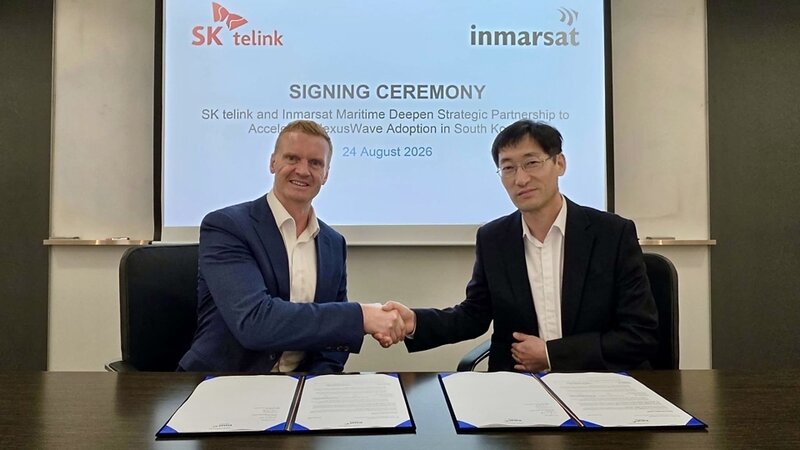
Connected maritime operations are helping shipping companies manage increasingly data-driven fleets as Inmarsat Maritime and SK telink expand NexusWave services across South Korea. The connectivity platform is designed to support cloud-based applications, remote technical assistance, cybersecurity strategies, vessel performance optimization and connected crew services. NexusWave can also manage individual network connections according to local regulatory requirements while maintaining service, supporting vessels traveling across complex Asian markets. Planned integration with ViaSat-3 will further increase regional capacity and flexibility.
For Inmarsat Maritime and SK telink, the agreement provides access to major South Korean shipping operators across container ships, car carriers and other vessel types. More reliable digital infrastructure could help shipowners improve operational efficiency, reduce connectivity disruptions and support remote fleet management. The partnership also positions both companies to capture growing demand for connected maritime services as shipping companies increase their reliance on digital applications and real-time vessel data.
Image Credit: Inmarsat Maritime
What Makes This Trend Stand Out
- Connected Fleet Management
- Real-time vessel data and cloud-based tools are reshaping shipping operations by enabling more efficient remote monitoring, diagnostics and performance optimization.
- Maritime Cybersecurity
- Growing reliance on connected ship systems creates demand for security platforms that protect fleet communications, onboard applications and operational data across regions.
- Satellite-powered Crew Services
- Expanded maritime connectivity supports crew welfare through digital communication, entertainment and workplace services that improve life onboard long-haul vessels.
Sectors Adopting This
- Maritime Shipping
- Digital infrastructure is becoming a competitive differentiator as operators seek lower downtime, stronger fleet visibility and more resilient cross-border connectivity.
- Satellite Communications
- High-capacity satellite networks are opening new service models for vessels that require stable broadband coverage across complex and regulated trade routes.
- Logistics Technology
- Connected vessel platforms are extending supply chain visibility by linking ship performance, cargo movement and operational decision-making with real-time data systems.