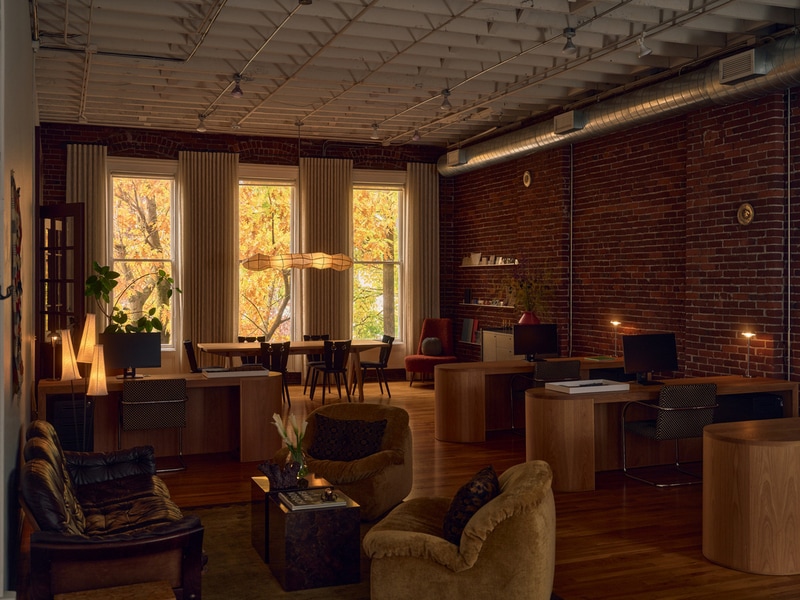
The Pat Austin office occupies a 1,200-square-foot workspace inside Portland's 1884 Historic Cully Building, where founders Candace Cohu and Ally Hasche spent three years shaping the interior through an incremental design process. Exposed brick walls, heavy timber construction, and large windows provide the architectural foundation for an open workspace featuring custom maple desks, a conference table, a residential-style lounge, and a dedicated materials library. Rather than completing the project at once, the studio introduced vintage furniture, custom pieces, artwork, and furnishings gradually as the practice expanded.
White walls and a palette of wood, stone, woven fibers, and earth-toned furnishings create a warm, residential atmosphere that continues to evolve over time. A major update completed in late 2025 added custom upholstery, drapery, a sculptural pendant above the conference table, fresh paint, and an upholstered acoustic wall within the materials library.
Image Credit: Pablo Enriquez
Why This Trend Is Growing
- Incremental Workspace Design
- Gradually evolving interiors create room for adaptive procurement models, modular furnishings, and phased design services that align with changing team needs.
- Residential Office Aesthetics
- Warm materials, lounge-like layouts, and domestic textures are reshaping workplace expectations around comfort, hospitality, and employee experience.
- Heritage Building Adaptation
- Historic architectural features paired with contemporary custom elements suggest new value in preserving character while modernizing spaces for creative work.
Industries Being Reshaped
- Interior Design
- Studios can differentiate through long-term spatial curation, custom fabrication, and iterative refresh strategies that extend beyond one-time project delivery.
- Commercial Real Estate
- Older office properties gain competitive relevance when exposed structure, natural light, and flexible layouts support boutique workplace environments.
- Furniture Manufacturing
- Demand for custom desks, acoustic walls, upholstery, and mixed-material pieces points to growth in small-batch production for evolving professional spaces.