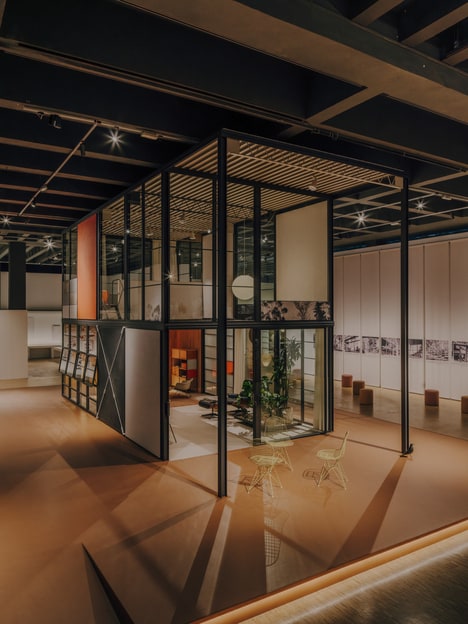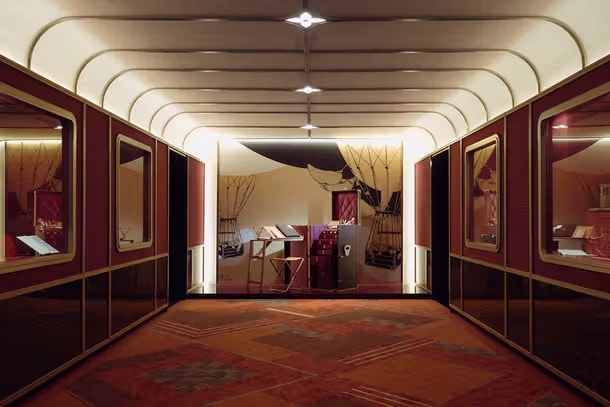
The Louis Vuitton Objets Nomades presentation at Milan Design Week 2026 revisits the brand’s earliest venture into furniture through a reissue of Pierre Legrain’s 1921 Celeste dressing table. Originally conceived in an Omega-shaped silhouette, the piece is reproduced using lacquered wood and Nomade leather, maintaining its distinctive curved profile. The re-edition is shown within a broader exhibition staged at Palazzo Serbelloni, where the brand organizes its display into immersive rooms that reference both historical and contemporary design languages.
The installation also includes additional reissued works from Legrain’s archive, such as the Riviera Chilienne chair, constructed from wood, leather, and mother-of-pearl marquetry. These heritage pieces are presented alongside newer Objets Nomades designs by studios including Raw Edges and Estudio Campana, creating a contrast between early 20th-century Art Deco forms and current experimental furniture.
Image Credit: Louis Vuitton
What Makes This Trend Stand Out
- Heritage Design Reissues
- Reproducing archival furniture with contemporary materials and branding presents new pathways for marrying provenance-driven storytelling with premium product lines.
- Immersive Curated Rooms
- Exhibiting furniture within historically referenced, immersive environments signals potential for experiential retail formats that blur museum curation and commerce.
- Material and Craft Fusion
- Blending traditional techniques like marquetry with modern finishes and novel leather treatments highlights opportunities for innovation at the intersection of artisanal craft and scalable manufacturing.
Sectors Adopting This
- Luxury Fashion Houses
- High-end labels extending into furniture and home objects indicate a business model expansion that leverages brand equity to enter adjacent luxury markets.
- Contemporary Furniture Studios
- Design studios that juxtapose archival forms with experimental approaches are positioned to redefine limited-edition collections and bespoke production methods.
- Museum and Exhibition Services
- Institutions and event producers staging immersive design shows create demand for integrated experiences combining conservation-grade presentation, storytelling, and commercial partnerships.