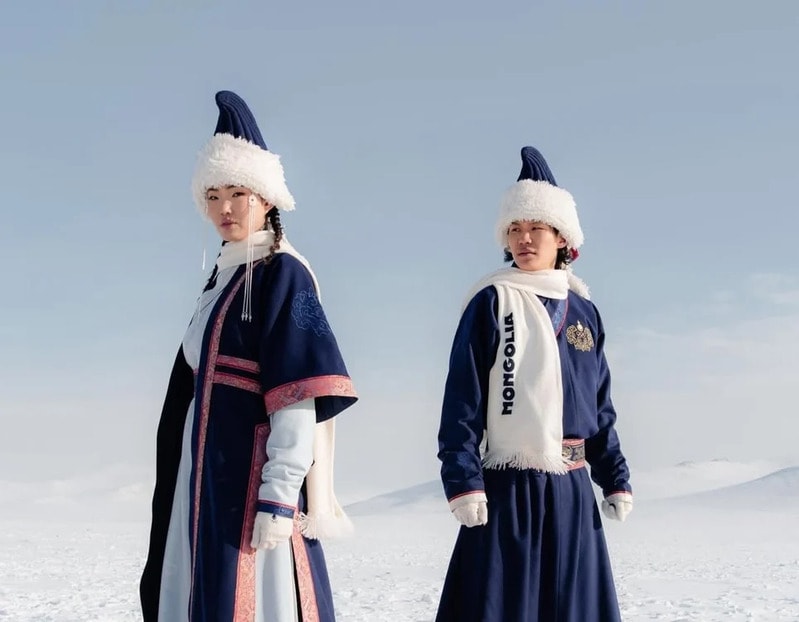
The new Mongolia Winter Olympics uniforms draw on traditional nomadic clothing as the country’s national team outfits for the 2026 Milano-Cortina Games were unveiled by Mongolian brand Goyol Cashmere in collaboration with the Mongolian National Olympic Committee. The ceremonial and everyday uniforms reference clothing styles from the Great Mongol Empire of the 13th to 15th centuries, reinterpreting functional historic garments through modern tailoring suited to cold-weather conditions. The formal pieces feature raised collars for wind protection, overlapping closures for warmth, and tailored silhouettes inspired by traditional deels, the classic Mongolian robe.
The uniforms are constructed using locally sourced Mongolian cashmere, a fibre long relied upon by nomadic communities for insulation and durability, and are trimmed with silk and embroidered with traditional motifs that reflect cultural heritage. Alongside the formal attire, the collection includes casual knitwear influenced by alpine ski sweater aesthetics and enriched with patterns referencing the ger, the traditional Mongolian dwelling, and rhythms of nomadic life. The unveiling was accompanied by the slogan “What We Carried Through Winter, We Carry to the World."
Image Credit: Goyol Cashmere
What's Driving This Trend
- Heritage Fashion
- Incorporating traditional cultural elements into modern sports uniforms illustrates the growing trend of heritage fashion, merging historical aesthetics with contemporary apparel for a distinct style statement.
- Sustainable Local Sourcing
- The use of locally sourced Mongolian cashmere in national team uniforms highlights a trend towards sustainable local sourcing, which reduces environmental impact and supports regional economies.
- Functional Traditional Design
- Reinterpreting historic garments through modern tailoring techniques showcases a trend of infusing functional traditional designs with current fashion sensibilities, enhancing both performance and cultural significance.
Who This Affects Most
- Textiles and Apparel
- By integrating historic design elements with contemporary materials, the textiles and apparel industry sees disruptive opportunities in creating culturally enriched, high-performance clothing.
- Sustainable Fashion
- The focus on using local and durable materials like cashmere places the sustainable fashion industry at the forefront of combining ecological responsibility with cultural heritage.
- Sporting Goods
- The development of culturally significant sports uniforms marks a transformative innovation in the sporting goods industry, where functional design meets national identity and pride.