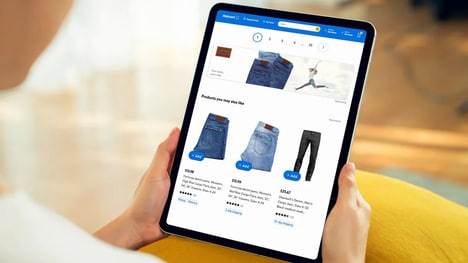
Levi Strauss & Co. partnered with Microsoft to build an agentic AI platform centered on a single “super agent” designed to streamline work across the entire business. Embedded in Microsoft Teams and powered by Azure, the system is meant to automate routine, task-based workflows and enhance both in-store and online retail experiences. The initiative supports Levi Strauss’ push to operate as a direct-to-consumer–first, data-driven apparel retailer.
The super agent coordinates multiple specialized AI sub-agents that sit in functions such as IT, human resources, and operations, acting as an intelligent hub that surfaces insights, support, and automation to employees. While the platform is still in development and testing, Levi Strauss planned a phased rollout beginning in early 2026, extending to global offices later that year. In parallel, the company introduced Outfitting, an AI-powered styling feature in its mobile app, and expanded Stitch, an in-store AI assistant for staff, to 60 U.S. locations after a pilot.
This ecosystem of AI tools points to a broader shift toward operational intelligence in retail, where employees gain faster access to information and guidance at every touchpoint. Shoppers benefit from more responsive service, tailored styling suggestions, and greater consistency across channels. For the fashion and retail sector, Levi Strauss’ partnership with a major cloud provider underscores how agent-based AI can move beyond chatbots into networked systems that boost efficiency, support frontline teams, and elevate the overall customer journey.
Image Credit: autsawin uttisin / Shutterstock
Why This Trend Is Growing
- Agent-based AI Platforms
- Agent-based AI platforms represent a shift from isolated chatbots to connected systems that enhance efficiency and customer engagement across entire businesses.
- Operational Intelligence in Retail
- Operational intelligence in retail highlights the use of AI to provide employees with quick access to crucial information, improving decision-making and service delivery.
- AI-enhanced Direct-to-consumer Strategies
- AI-enhanced direct-to-consumer strategies are becoming essential as businesses like Levi Strauss use AI to tailor consumer interactions and streamline operations.
Industries Being Reshaped
- Fashion and Apparel
- The fashion and apparel industry is poised for transformation through AI-driven tailor-made experiences that enhance customer satisfaction and operational efficiency.
- Cloud Computing and AI
- Cloud computing and AI industries are converging as retail companies increasingly rely on advanced cloud-based AI systems to innovate and optimize their processes.
- Retail Technology Solutions
- Retail technology solutions are evolving rapidly with the integration of intelligent systems that promise to redefine customer service and operational workflows.